| Primary Light Spectrum | Red: approximately 620–700 nm Near-infrared: approximately 700–1,000 nm | Red light is commonly selected for surface-level skin applications, while near-infrared light is used when greater tissue penetration is desired. | Confirm the actual wavelength range in the technical specifications rather than relying only on terms such as “red light” or “full spectrum.” | Near-infrared light is invisible or nearly invisible, so the presence of bright visible red light does not confirm near-infrared output. |
| Common Wavelength Choices | Approximately 630–660 nm for visible red light and 810–850 nm for near-infrared light are frequently used in photobiomodulation equipment. | Often used in skin-focused protocols, general wellness programs, muscle recovery routines, and localized comfort applications. | Look for independent wavelength testing, clearly stated peak wavelengths, and consistent coverage across the treatment area. | A wider wavelength range is not automatically better; suitability depends on the intended use, dose, coverage, and treatment schedule. |
| Irradiance | Irradiance is the optical power delivered per unit area, normally expressed as mW/cm². Consumer and professional devices can vary substantially. | Helps determine how quickly a target dose can be delivered and supports more consistent treatment planning. | Verify whether the stated irradiance was measured at the recommended treatment distance and whether it applies to the whole treatment area. | Higher irradiance does not necessarily produce better results. Excessive exposure can increase heat, discomfort, or skin irritation. |
| Energy Dose | Fluence is measured in J/cm². A basic calculation is: dose = irradiance × time. For example, 50 mW/cm² for 10 minutes delivers approximately 30 J/cm². | Provides a more useful basis for comparing treatment protocols than session time alone. | Check whether the spa or device provides a recommended dose range, session duration, and treatment frequency for the intended application. | Published protocols differ by target tissue and objective. Start conservatively and follow qualified professional guidance when available. |
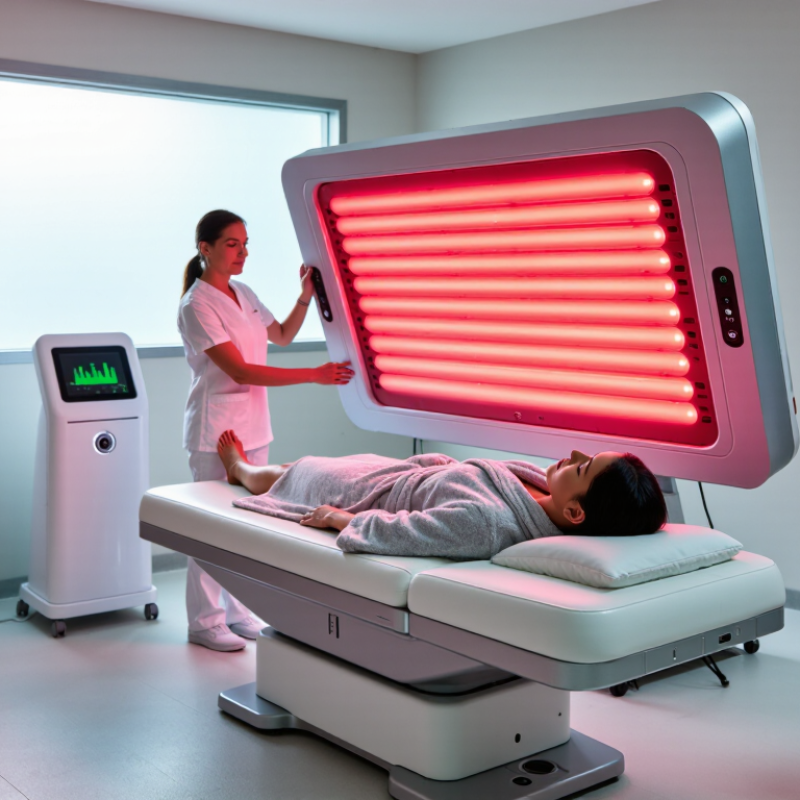
| Treatment Coverage | Options include localized panels, facial units, full-body panels, and enclosed systems. Coverage may range from a small body region to most of the body. | Larger coverage can make full-body wellness sessions more convenient, while localized systems may be easier to position accurately. | Compare illuminated area, number of treatment positions, adjustable height, distance from the light source, and session capacity. | Uniform coverage is important. Hot spots, large untreated gaps, or inconsistent positioning may reduce dose consistency. |
| Skin Appearance and Texture | Red light therapy is commonly used as a non-invasive cosmetic treatment intended to support the appearance of skin firmness, texture, and overall tone. | Common spa uses include fine-line appearance, mild uneven tone, dull-looking skin, and general skin revitalization. | Ask whether the protocol is designed for cosmetic maintenance, whether photos are taken under consistent lighting, and what time frame is realistic. | Results vary. Red light therapy should not be marketed as a guaranteed wrinkle remover or replacement for clinically indicated dermatological care. |
| Acne-Prone Skin | Red light may be used to support inflammation management, while blue light is a separate modality often used in acne-focused devices. | Spa programs may combine red light with other non-invasive skin-care steps to support the appearance of calmer skin. | Confirm whether the system uses red light alone or combines multiple light colors, and ask how eye protection and skin sensitivity are managed. | Light therapy is not appropriate for every type or severity of acne. Persistent or severe acne should be assessed by a qualified healthcare professional. |
| Exercise Recovery and Muscle Comfort | Near-infrared wavelengths are commonly included in photobiomodulation systems used around exercise and localized muscle areas. | Common wellness uses include post-exercise recovery routines, temporary muscle comfort, and support for an active lifestyle. | Check whether the unit can target the relevant muscle group, maintain a stable distance, and deliver repeatable sessions. | It should not be presented as a treatment for an undiagnosed injury or as a substitute for medical evaluation, rehabilitation, sleep, or proper training. |
| Temporary Joint Comfort | Localized red or near-infrared treatments are sometimes used as a complementary wellness approach for temporary comfort in areas such as the knee, shoulder, or hand. | May be selected by users seeking non-invasive support for everyday stiffness or activity-related discomfort. | Look for adjustable positioning, sufficient treatment-area coverage, and clear instructions for avoiding direct pressure on painful areas. | New, severe, swollen, hot, or persistent joint pain requires appropriate clinical assessment rather than self-treatment alone. |
| Session Length and Frequency | Many consumer and spa protocols use sessions of approximately 5–20 minutes, often several times per week; exact schedules vary by device and purpose. | A consistent, moderate routine is generally more practical than occasional very long sessions. | Select equipment with an automatic timer, clear distance instructions, and a treatment schedule that clients can follow consistently. | Do not extend sessions simply because a response is not immediately visible. Photobiomodulation effects are not always instant. |
| Eye Protection | Visible red and near-infrared systems can produce intense light exposure. Eye protection requirements depend on wavelength, intensity, positioning, and manufacturer instructions. | Proper eye-safety procedures improve client comfort and help reduce unnecessary exposure during facial or full-body treatments. | Confirm that suitable protective eyewear is provided and that instructions address facial sessions, enclosed systems, and near-infrared output. | Never stare directly into high-intensity LEDs. People with eye conditions or light sensitivity should seek professional advice before treatment. |
| Heat and Comfort | Red light therapy is designed to be non-invasive, but LED systems can still produce warmth depending on power, ventilation, and session duration. | A comfortable, low-heat experience may improve client adherence and reduce the chance of premature session termination. | Evaluate cooling fans, ventilation, temperature control, seating or positioning, noise level, and emergency shut-off access. | Stop the session if burning, significant discomfort, dizziness, or unusual skin irritation occurs. |
| Skin and Medication Screening | Some medicines and skin conditions can increase sensitivity to light. Photosensitizing drugs may include certain antibiotics, retinoids, and other prescription or non-prescription medicines. | Screening helps identify clients who may need medical clearance or a modified protocol. | Use a written intake form covering medications, photosensitivity, recent procedures, eye conditions, pregnancy-related concerns, and relevant medical history. | Follow the advice of a healthcare professional when a client uses photosensitizing medication or has a condition affected by light exposure. |
| Device Quality and Reliability | Important specifications include wavelength accuracy, irradiance measurement, electrical safety, timer function, thermal management, and treatment-area uniformity. | Reliable hardware supports repeatable sessions, predictable operating costs, and better client experience. | Request test reports, operating instructions, cleaning guidance, warranty terms, service availability, and replacement-part information. | Avoid equipment that provides no measurable specifications or makes broad medical claims without supporting evidence. |
| Hygiene and Spa Operations | Non-contact LED treatments still require routine cleaning of surfaces, protective eyewear, controls, seating, and any areas touched by clients. | A clear hygiene process supports client confidence and helps maintain consistent daily operations. | Confirm that surfaces are compatible with approved disinfectants and that cleaning does not obstruct vents, LEDs, sensors, or electrical components. | Follow the equipment’s cleaning instructions and allow surfaces to dry completely before the next session. |
| Best Overall Buying Priorities | Prioritize verified wavelengths, measured irradiance, suitable coverage, safety controls, reliable construction, and transparent operating instructions. | These factors generally matter more than appearance, exaggerated claims, or the highest advertised power number. | Compare total cost of ownership, installation requirements, staff training, maintenance, session throughput, and client comfort. | Choose a system that matches the intended cosmetic or wellness service and use evidence-based language in all client communications. |