
Which Is the Best Fractional CO2 Laser Manufacturer in China?

Choosing the best Fractional CO2 Laser manufacturer in China requires more than comparing prices or polished websites. A reliable evaluation should examine engineering quality, clinical suitability, manufacturing experience, and long-term support. Buyers should verify the laser source, 10,600 nm output, pulse control, scanning accuracy, cooling design, and handpiece durability. These details affect treatment consistency, operator safety, and patient comfort.

Real evidence matters.

A serious manufacturer should provide traceable certifications, quality-management records, product specifications, and clear maintenance procedures. Factory visits can reveal useful details, including calibration areas, assembly standards, inspection records, and spare-parts storage. Product demonstrations should use realistic operating conditions, not only attractive showroom videos. Ask how the company handles software updates, warranty claims, training, and technical problems after delivery. Response time often matters more than a low initial quotation.

This guide compares Chinese manufacturers through a practical, evidence-based lens. It considers product performance, customization options, export experience, regulatory documentation, and feedback from verified users. However, no comparison is flawless. Public information may be incomplete, and some customer reviews require careful confirmation. A manufacturer with impressive equipment may still provide weak after-sales service. Another supplier may offer fewer features but deliver better training and faster support. That difference can become obvious after months of daily use. Readers should confirm every important claim independently and match each device with local regulations, clinical needs, and staff expertise. The “best” manufacturer is rarely universal; it is the supplier that remains dependable when the machine is busy, a component fails, or an operator needs help quickly.
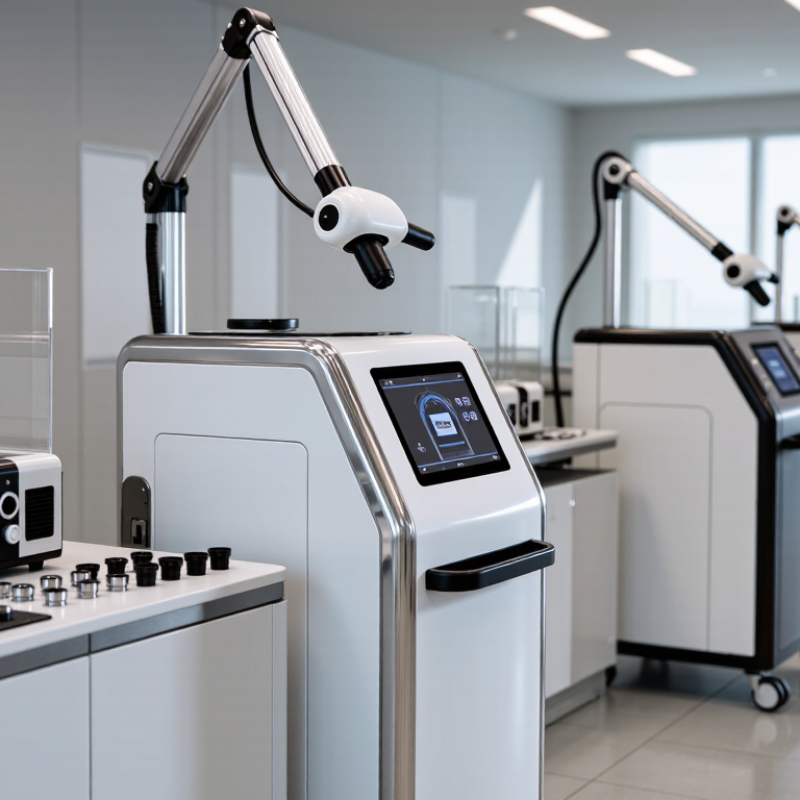
Which Is the Best Fractional CO2 Laser Manufacturer in China?

What Is a Fractional CO2 Laser and Where Is It Used?

Fractional CO2 lasers deliver 10,600-nanometer infrared energy in tiny, separated treatment columns. These columns create controlled heat in the skin while leaving surrounding tissue untreated, supporting healing between treated spots. Not a full-field peel. Dermatology literature describes their use for acne scars, fine lines, sun-related texture changes, and selected surgical scars. The American Society of Plastic Surgeons’ 2023 Plastic Surgery Statistics Report recorded about 3.4 million skin-resurfacing procedures in the United States. That figure covers multiple resurfacing methods, not fractional CO2 alone, but it shows the procedure category’s broad clinical use.

Treatment depth and density should match the concern, skin characteristics, and tolerance for downtime. A clinician may adjust settings for shallow texture changes or deeper scars; stronger treatment can also mean longer redness and greater pigment-change risk. Eye protection and careful aftercare matter. Results vary. A practical consultation should cover medical history, expected recovery, and alternatives, rather than promise a fixed number of sessions. One caveat: published studies use differing devices, settings, and outcome scales, so their results do not transfer neatly to every patient. Good evaluation includes photographs under consistent lighting and follow-up after healing.


Fractional CO₂ Laser: Wavelength Comparison

CO₂ lasers commonly operate at approximately 10,600 nm. In fractional mode, the beam creates microscopic treatment zones while leaving surrounding skin untreated. Fractional CO₂ is used for skin resurfacing, including treatment of wrinkles, sun damage, and certain scars. Wavelengths shown are typical values; treatment suitability depends on the device and clinical assessment.

Which Criteria Define a Leading Chinese Manufacturer?

Choosing the best fractional CO2 laser manufacturer in China requires more than comparing prices or showroom photos. A leading manufacturer should show practical engineering experience, clear technical documentation, and consistent quality control. Ask for factory records, production photographs, calibration procedures, and traceability for key components. A polished showroom is not proof.

Reliable manufacturers explain laser parameters in plain language. They should provide details about wavelength stability, pulse control, cooling performance, handpiece design, and treatment safety features. Independent testing, quality certificates, and documented inspection processes add credibility. However, certificates alone are not enough. I would also check whether actual machines match the tested specifications.

After-sales support reveals professional maturity. Look for structured installation, operator training, maintenance guidance, spare-part availability, and responsive technical communication. A useful supplier should understand different clinic environments, power conditions, and service expectations. Request a live demonstration and ask technical questions without preparation. The answers may expose weak knowledge.

Cost still matters, but the cheapest quotation can hide fragile components or limited support. I would compare long-term operating costs, not only the purchase price. User feedback is helpful, although it may be incomplete or carefully selected. Even experienced buyers can overlook small details, such as software updates or replacement handpiece costs. That uncertainty deserves honest discussion before any order.

How Do Chinese Manufacturers Compare in Technology and Quality?

Chinese fractional CO2 laser manufacturers differ less by headline specifications than by how consistently they control energy delivery, scanning, and cooling. The wavelength is typically 10,600 nm, but pulse shape and spot spacing affect the treatment pattern. Small differences matter. A clear comparison should include output stability tests, calibration records, and sample treatment patterns—not just a brochure’s maximum power.

Grand View Research projected a 15.3% compound annual growth rate for the global aesthetic lasers market from 2023 to 2030. That forecast signals rising competition, not proof of better devices. Quality evidence matters more. ISO 13485:2016 describes medical-device quality management systems, while IEC 60601-2-22:2019 addresses safety and essential performance for medical laser equipment. Neither certificate alone proves consistent performance across production batches. Ask for traceable test results and service records. Ask again.

A factory visit can reveal practical details: whether technicians log calibration, inspect handpieces, and document rejected units. Yet a polished demonstration may not reflect routine output. I would compare repeat measurements from several units and request the test method behind each figure. Some suppliers make this information easy to verify; others provide incomplete records. That gap deserves attention, even when the device looks impressive.

Which Is the Best Fractional CO2 Laser Manufacturer in China? — How Do Chinese Manufacturers Compare in Technology and Quality?
Comparison Dimension Technical or Quality Benchmark Evidence to Compare Why It Matters
Laser wavelength Medical CO2 lasers commonly operate at approximately 10.6 μm (10,600 nm). Check the device specifications, laser source documentation, and applicable test records. Wavelength is a basic specification for confirming that the system uses a CO2 laser source.
Fractional delivery A fractional scanner creates an array of small treatment zones while leaving intervening skin untreated. Review the scanner’s available patterns, spot distribution, treatment-area settings, and repeatability data. Pattern control affects treatment coverage and the consistency of energy delivery across an area.
Pulse and energy controls Settings should be clearly specified and adjustable within the device’s intended operating range. Request the operating manual, parameter definitions, calibration procedure, and output-test results. Clear controls and verified output help clinicians select and reproduce treatment settings.
Output consistency Energy delivery and scanner movement should remain consistent under the manufacturer’s stated test conditions. Compare documented acceptance tests, calibration records, and quality-control procedures. Repeatable output is an important indicator of manufacturing and process control.
Cooling and safety features Cooling functions, emergency stop controls, interlocks, and user warnings should be described in the instructions for use. Inspect the device documentation and verify safety functions during a product demonstration. Safety features support controlled operation but do not replace training or appropriate clinical judgment.
Electrical and laser safety Assess the complete device against the standards and regulatory requirements applicable to its intended market. Request certificates and test reports that identify the exact model, issuing body, scope, and validity. A certificate should be checked for relevance to the specific device; a logo alone does not establish performance.
Quality management system ISO 13485 is a quality-management-system standard for medical-device organizations; certification scope should be relevant to the product. Verify the certificate, certification body, scope, site, and current validity. A relevant, current certificate provides information about quality-management processes, not a guarantee of clinical outcomes.
Clinical and product documentation Claims should match the device’s documented intended use, applicable authorization, and available clinical evidence. Review the instructions for use, clinical evaluation materials, authorization details, and any limitations stated for the model. Evidence and authorization can vary by model and market; do not assume one approval applies to every version.
Manufacturing traceability Finished devices should be identifiable by model and serial or lot information, with documented inspection and release processes. Ask for sample traceability records, final-inspection checklists, and procedures for handling nonconforming products. Traceability supports quality investigations, service, and corrective actions.
Training, service, and parts Training materials, maintenance instructions, warranty terms, and service arrangements should be clear for the destination market. Compare response arrangements, parts availability, service documentation, and training provided to users. Practical support affects uptime and helps ensure that users operate and maintain the system appropriately.
Overall comparison approach There is no single specification that establishes a universally “best” manufacturer; performance should be assessed model by model. Compare the same intended use, configuration, documentation, test conditions, and service requirements across suppliers. A like-for-like review is more informative than relying on promotional claims or an isolated certificate.

What Certifications and Safety Standards Should Buyers Check?

When comparing Chinese fractional CO2 laser manufacturers, check documents, not just polished brochures. Ask for the product’s IEC 60601-2-22 test evidence, covering particular safety requirements for medical laser equipment. Also review IEC 60825-1 classification. This standard defines seven laser classes, with Class 4 presenting the highest hazard. The class alone does not prove a device is unsafe; it signals the need for suitable controls and training.

Request a valid ISO 13485 certificate and verify its scope, issuing body, and expiry date. ISO 13485 concerns a medical-device quality management system; it is not, by itself, product approval. Review electrical safety and electromagnetic compatibility test reports, plus labeling, emergency-stop function, protective eyewear specifications, and instructions for use. Check that the tested model and configuration match the unit being quoted. Requirements differ by destination market, so confirm local registration and import rules with the relevant authority. Paperwork can look convincing. Details matter.

Tips: Ask for full reports, not certificate screenshots. Confirm serial-number traceability and written service support. If a supplier cannot explain a test result clearly, pause and verify it independently. One small mismatch can deserve a second look.

How Can Buyers Choose the Best Fractional CO2 Laser Supplier?

Choosing the best fractional CO2 laser supplier requires more than comparing prices or counting product features. Buyers should examine manufacturing experience, engineering capability, and clinical support. Ask how long the factory has produced fractional CO2 systems. Request clear specifications for wavelength, energy range, pulse modes, cooling, and spot size. Vague answers deserve attention.

See it working.

A reliable supplier should provide product records, quality certificates, testing procedures, and traceable component information. Buyers can request a live demonstration using approved materials and observe beam consistency, interface response, and handpiece handling. Speak with existing customers when possible. Their maintenance experience may reveal more than a polished showroom. Confirm installation training, spare-part availability, software support, and response times before signing an agreement.

Do not ignore after-sales service.

Supplier evaluation should also include documentation quality. Manuals need clear operating steps, maintenance schedules, warnings, and troubleshooting guidance. The supplier should explain which settings require professional training and how to reduce avoidable treatment risks. Regional compliance requirements must be checked with qualified local experts, not assumed from a certificate alone. This is where many buyers become overconfident.

A low price can hide long downtime, limited training, or expensive replacement parts. However, the most expensive supplier is not automatically the safest choice. Compare total ownership costs over several years. Inspect the factory if practical, ask difficult questions, and record every promise in the contract. Some decisions still remain imperfect. Careful verification only makes the risk more visible.

TOP