
- Hospital Furniture
- Neonatal Care Product
- Operating Surgical Tables
- Orthopedic Implants
- Surgical Operating Led Lights
- Orthopedic External Fixators
- Laryngoscopes
- Orthopaedic Power Tools
- Medical Disposables
- Hospital Clothing
- Anaesthesia Products
- Autoclaves & Sterilizers
- Hospital Holloware
- Suction Units
- Rehabilitation Aids
- Stethoscopes
- Anesthesia Machine & Ventilators
- Cold Chain Equipment
- Electro Medical Equipments
- Orthopedic Instruments
- Surgical Operating Led Lights
- Physiotherapy products
5 Best Linear Abrasion Testers to Buy in 2026?
Choosing a Linear Abrasion Tester is less about finding the most impressive specification and more about matching the machine to the surface. A soft coating, a printed label, and a textured plastic part can respond very differently to the same rubbing action. Even a small change in load, stroke length, or abrasive can alter the wear pattern. The test setup matters.
A practical paraphrase of materials-science author Dr. George Wypych’s perspective—not a verbatim quotation—is: “A wear result is useful only when the method is repeatable.” That is a useful standard for comparing equipment. This guide looks at five Linear Abrasion Tester options to consider in 2026, with attention to adjustment range, control features, sample handling, and the kinds of materials each system may suit. Some details can look convincing on a product page. They still need checking against your own samples and test procedure.
Expect trade-offs. A compact unit may fit a busy lab bench, while a more configurable model may better support varied test requirements. Neither choice is automatically right. A clamp that holds a small coupon securely can matter more than a long feature list. And repeatability is not guaranteed by the machine alone; operators, consumables, and maintenance matter too. This comparison is a starting point, not a substitute for validating the tester with your actual materials.
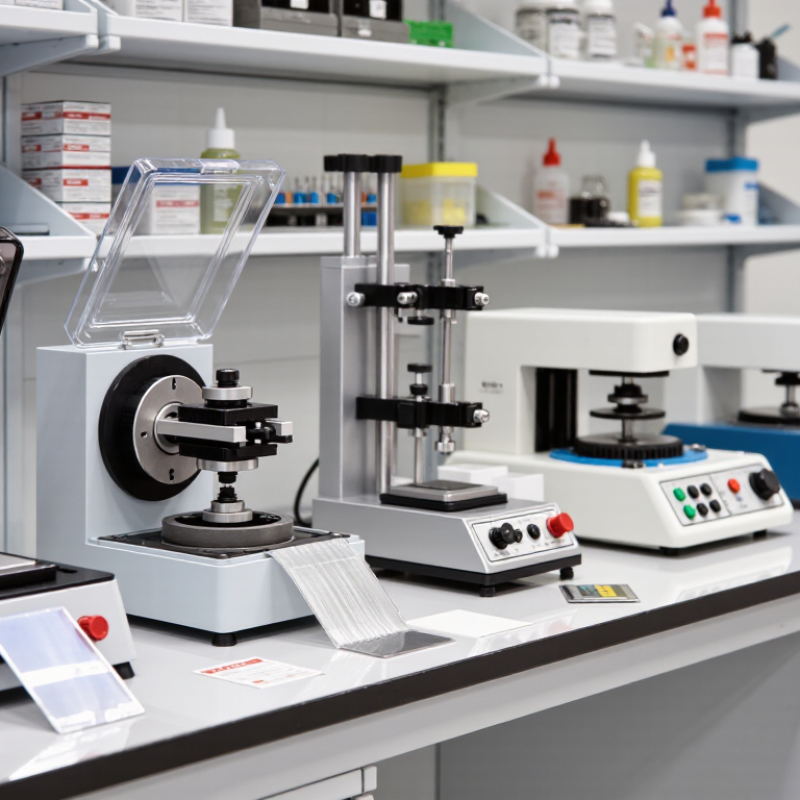
Table of Contents [Hide]
What a Linear Abrasion Tester Measures
What a Linear Abrasion Tester Measures
A linear abrasion tester tracks how a surface changes under repeated, controlled rubbing. The operator sets the contact force, stroke length, speed, abrasive material, and number of cycles. These settings matter: a rough pad under heavy pressure can expose a coating quickly, while a softer contact may mainly dull its gloss. Results can include cycles to visible damage, mass loss, color or gloss change, and wear-through. ASTM International’s D6279 method evaluates rub-abrasion mar resistance in high-gloss coatings, illustrating why test conditions and the chosen damage endpoint must be reported alongside results.
Numbers need context. ISO 12947-2, a professional textile testing standard, specifies Martindale test pressures of 9 or 12 kPa, depending on the intended use. Those figures are useful reference points, not direct settings for every linear abrasion test; the motion and contact geometry differ. Small changes matter. A leather-like polymer panel and a painted metal coupon may show different damage under identical cycles, so comparisons are meaningful only when materials, abrasives, loads, and endpoints match. In practice, inspect the track under consistent lighting and record early haze as well as obvious scratches. One weakness remains: visual scoring can vary between evaluators.