
- Hospital Furniture
- Neonatal Care Product
- Operating Surgical Tables
- Orthopedic Implants
- Surgical Operating Led Lights
- Orthopedic External Fixators
- Laryngoscopes
- Orthopaedic Power Tools
- Medical Disposables
- Hospital Clothing
- Anaesthesia Products
- Autoclaves & Sterilizers
- Hospital Holloware
- Suction Units
- Rehabilitation Aids
- Stethoscopes
- Anesthesia Machine & Ventilators
- Cold Chain Equipment
- Electro Medical Equipments
- Orthopedic Instruments
- Surgical Operating Led Lights
- Physiotherapy products
What Is the Best Lumbar Traction Table to Buy?
Choosing the best Lumbar Traction Table requires more than comparing prices, motors, and promotional claims. A table may look impressive in a showroom yet feel awkward during real clinical use. The better question is practical: Can it deliver controlled traction, support different patient sizes, and fit your treatment workflow?
Dr. James M. Cox, a recognized authority in non-surgical spinal care, has stated, “The goal of Cox Technic is to reduce pain and increase function.” His principle matters when evaluating equipment. A quality Lumbar Traction Table should support careful clinical judgment, not replace it. Look for adjustable pelvic and thoracic sections, smooth mechanical movement, dependable locking systems, and clear force controls. The padding should remain stable beneath the patient, even during repeated sessions. Small details matter.
Safety comes first.
A trustworthy buyer should examine manufacturer documentation, warranty coverage, service access, electrical certifications, and user training. Tables with excessive features may create unnecessary complexity. Basic models may limit treatment options later. That trade-off deserves honest consideration. Patient comfort also affects cooperation; cold vinyl, noisy motors, or difficult restraints can undermine an otherwise sound treatment plan.
This guide compares important table types, clinical features, construction quality, and ownership costs. It also considers what specifications mean in daily practice. No single model suits every clinic. The best choice depends on treatment goals, patient population, available space, and professional experience. Even experienced clinicians can overlook maintenance time or staff ergonomics. That is where careful evaluation becomes more valuable than persuasive advertising.
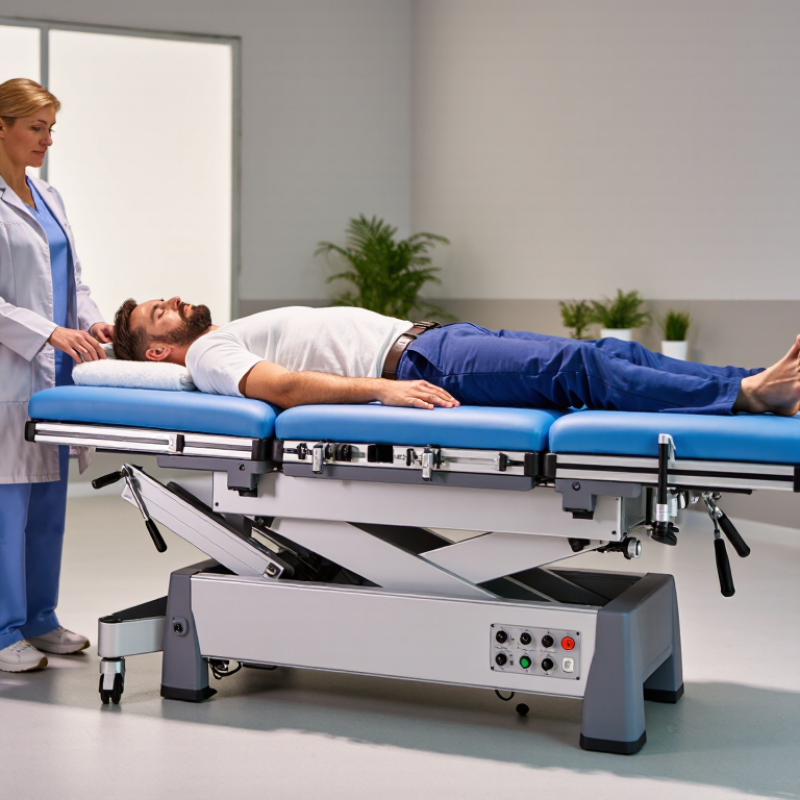
Table of Contents [Hide]
What Is a Lumbar Traction Table and How Does It Work?
A lumbar traction table uses a padded surface, pelvic harness, and controlled pulling force. The table gently separates the lower spinal segments. Some models also flex the table during treatment. This may temporarily reduce pressure, ease muscle guarding, and create space around irritated nerve roots. It does not permanently “put a disc back.”
The World Health Organization reports that low back pain affected about 619 million people worldwide in 2020. That figure may reach 843 million by 2050. However, traction evidence remains mixed. A Cochrane review found little meaningful benefit for many people with chronic low back pain. The 2021 JOSPT clinical practice guideline recommends traction only cautiously for selected patients, especially when leg symptoms and certain movement patterns are present. The evidence is not perfectly tidy. A costly table is not automatically the best table.
Tips: Choose a table with adjustable force, secure pelvic support, emergency release, and clear load limits. Ask a licensed clinician to assess your symptoms before treatment. Avoid self-testing high force. Stop if numbness, weakness, sharp pain, or worsening leg symptoms appear. A practical trial should record pain, walking tolerance, and sleep before and after several sessions. If nothing improves, reconsider the plan. Some people respond well; others notice almost nothing. That uncertainty deserves honest discussion.