- Hospital Furniture
- Neonatal Care Product
- Operating Surgical Tables
- Orthopedic Implants
- Surgical Operating Led Lights
- Orthopedic External Fixators
- Laryngoscopes
- Orthopaedic Power Tools
- Medical Disposables
- Hospital Clothing
- Anaesthesia Products
- Autoclaves & Sterilizers
- Hospital Holloware
- Suction Units
- Rehabilitation Aids
- Stethoscopes
- Anesthesia Machine & Ventilators
- Cold Chain Equipment
- Electro Medical Equipments
- Orthopedic Instruments
- Surgical Operating Led Lights
- Physiotherapy products
What Is Bovine Collagen Powder and How Does It Work?
What Is Bovine Collagen Powder and How Does It Work? This guide examines the answer through nutrition science, product quality, and practical use. Bovine collagen comes mainly from carefully processed cattle hides, bones, or connective tissues. Manufacturers break the protein into smaller peptides through hydrolysis. This process creates a powder that mixes more easily in water, coffee, smoothies, or yogurt.
The phrase Collagen Powder Bovine usually describes a supplement containing bovine-derived collagen peptides. After digestion, the body separates these peptides into amino acids and smaller fragments. Some may support the production of collagen in skin, cartilage, bones, and other connective tissues. The powder does not travel directly to a wrinkle or aching knee. Biology is less precise than advertising often suggests.
Human research reports possible improvements in skin hydration, elasticity, and joint comfort. However, results vary by dose, product quality, study design, and individual health. Research remains promising, not magical. Some findings also come from small or industry-funded trials, which deserve careful interpretation. That matters.
A reliable product should disclose its source, peptide form, serving size, and testing standards. Third-party testing can help verify identity, purity, and unwanted contaminants. Bovine collagen is not suitable for people avoiding animal products, and it may not fit every dietary or medical need. Anyone with allergies, kidney concerns, pregnancy, or ongoing treatment should seek professional advice before use. Personal experience can be useful, but it cannot replace controlled evidence. The most honest view is simple: bovine collagen may complement a balanced diet, yet it cannot repair poor nutrition, lack of sleep, or unrealistic expectations.
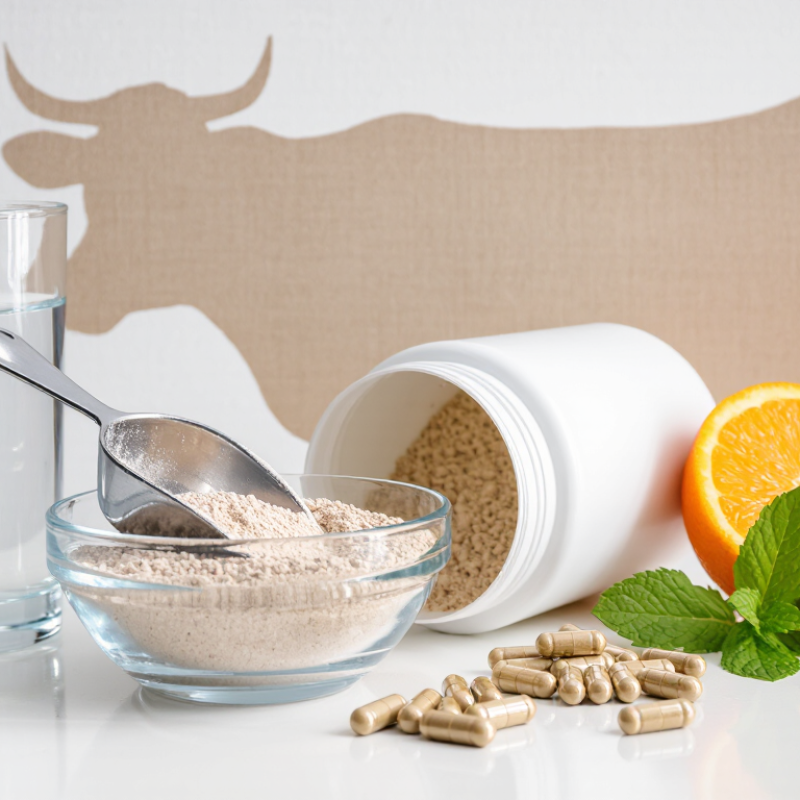
Table of Contents [Hide]
What Is Bovine Collagen Powder?
Bovine collagen powder is a protein ingredient made from cattle hide, bones, or connective tissue. Manufacturers clean these materials and process them into collagen peptides. These peptides are usually hydrolyzed, meaning their long protein chains are broken into smaller pieces. The result is a pale powder that dissolves in water, coffee, soup, or smoothies. It usually has a mild taste. Some products may contain additional flavoring, sweeteners, or minerals, so the ingredient label deserves careful attention.
Collagen naturally contains glycine, proline, and hydroxyproline. After digestion, the body absorbs amino acids and small peptide fragments, then uses them according to its needs. It does not send every scoop directly to the skin or joints. That common idea is too simple.
Research suggests collagen supplements may support skin elasticity, hydration, or joint comfort for some adults, but results differ between studies and individuals. Diet, age, exercise, sleep, and existing health conditions also matter.
Quality is another concern. Reliable products should identify the collagen source, processing method, allergens, and independent testing details. “Natural” does not always mean better.
People with dietary restrictions, pregnancy, allergies, or medical conditions should seek professional advice before regular use.
The evidence is promising, yet still incomplete.