
- Hospital Furniture
- Neonatal Care Product
- Operating Surgical Tables
- Orthopedic Implants
- Surgical Operating Led Lights
- Orthopedic External Fixators
- Laryngoscopes
- Orthopaedic Power Tools
- Medical Disposables
- Hospital Clothing
- Anaesthesia Products
- Autoclaves & Sterilizers
- Hospital Holloware
- Suction Units
- Rehabilitation Aids
- Stethoscopes
- Anesthesia Machine & Ventilators
- Cold Chain Equipment
- Electro Medical Equipments
- Orthopedic Instruments
- Surgical Operating Led Lights
- Physiotherapy products
How to Choose Surgical Instruments for Global Sourcing?
Choosing surgical instruments for global sourcing requires more than comparing prices and polished catalog photographs. A forceps may look identical online, yet its jaw alignment, surface finish, alloy composition, and sterilization performance can differ significantly. The World Health Organization’s Global Patient Safety Report 2024 states that about one in ten patients experiences harm during healthcare, with more than half considered preventable. This makes instrument selection a clinical and supply-chain decision.
This guide explains about surgical instruments through measurable sourcing criteria. These include material traceability, manufacturing controls, ergonomic testing, packaging integrity, and supplier responsiveness. ISO 13485 provides a recognized framework for medical-device quality management. ISO 14971 also supports risk management throughout a product’s lifecycle. However, certification alone is not proof of consistent performance. A factory may hold valid certificates while producing uneven batches.
Global logistics create another concern. The World Bank’s Logistics Performance Index 2023 shows substantial differences in customs efficiency, infrastructure, and shipment reliability between countries. A low purchase price can quickly lose value when instruments arrive late, damaged, or without complete documentation. Ask for batch records, inspection reports, sample approvals, and sterilization evidence. Inspect the details.
There is no perfect supplier scorecard. That is worth admitting. Buyers may also overvalue certificates and underestimate user feedback from surgeons and sterile-processing teams. A stronger decision combines documented compliance, hands-on evaluation, transparent communication, and realistic total-cost analysis. The following outline offers a practical method for comparing suppliers without treating global sourcing as a simple price competition.
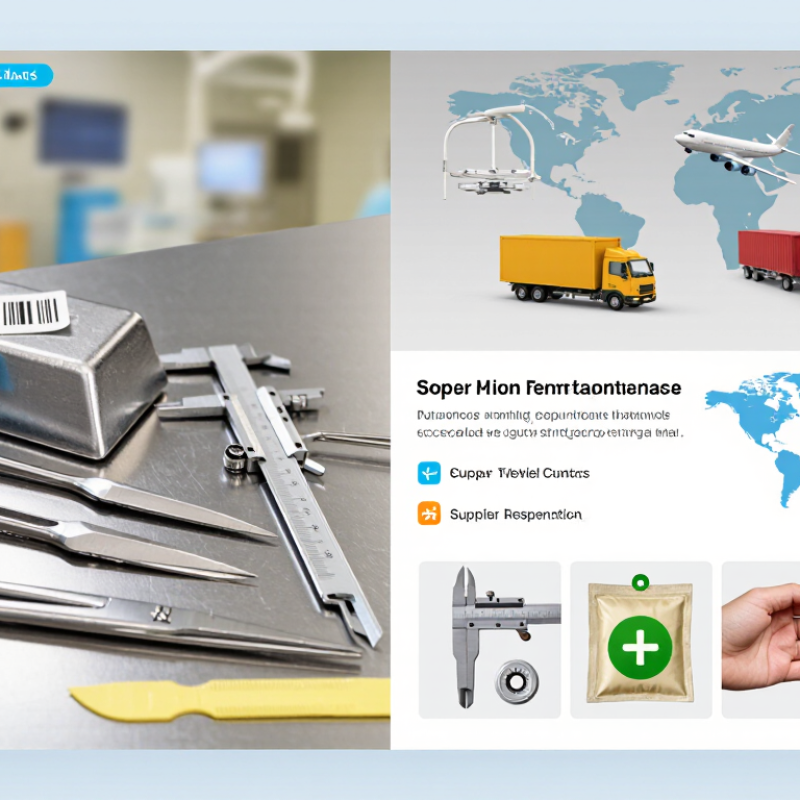
Table of Contents
[Hide]
Define Surgical Instrument Requirements and Intended Use
Define Surgical Instrument Requirements and Intended Use
Global sourcing should begin with the procedure, not the product catalogue. Describe the exact clinical task, tissue type, access route, and expected operating time. A needle holder for delicate vascular work requires different jaw control than one used for routine closure. Record required length, jaw pattern, tip profile, handle design, and acceptable weight. Details matter.
Consider who will use the instrument and under what conditions. A surgeon with smaller hands may need a different grip diameter. Limited visibility may require angled or extended instruments. Decide whether the instrument will be reusable or single-use. For reusable devices, define cleaning, disinfection, sterilization, drying, and inspection requirements before requesting quotations. Materials should resist corrosion and remain functional after repeated processing. Test it.
A dependable specification also identifies measurable acceptance criteria. These may include jaw alignment, cutting performance, locking force, surface finish, and movement smoothness. Ask potential suppliers for material declarations, inspection records, sterilization guidance, and traceability information. Samples should be evaluated by qualified clinical and technical personnel in realistic handling conditions. Do not rely on photographs alone. I have seen polished samples conceal awkward hinges and uncomfortable handles. That weakness deserves attention. Requirements may change after hands-on testing, and that is not failure; it is useful evidence. Keep revisions controlled, documented, and linked to the intended clinical use.
Related Posts
-

2026 Best Surgical Instruments Suppliers for Global Buyers
-

How to Find Surgical Instruments Suppliers Worldwide?
-

2026 Best Medical Tools for Healthcare Professionals and Patients?
-

How to Choose the Right Medical Tools for Your Needs?
-

10 Best Orthopedic Implants for Enhanced Recovery and Mobility?
-

2026 Top Surgery Instruments Types for Global Buyers?