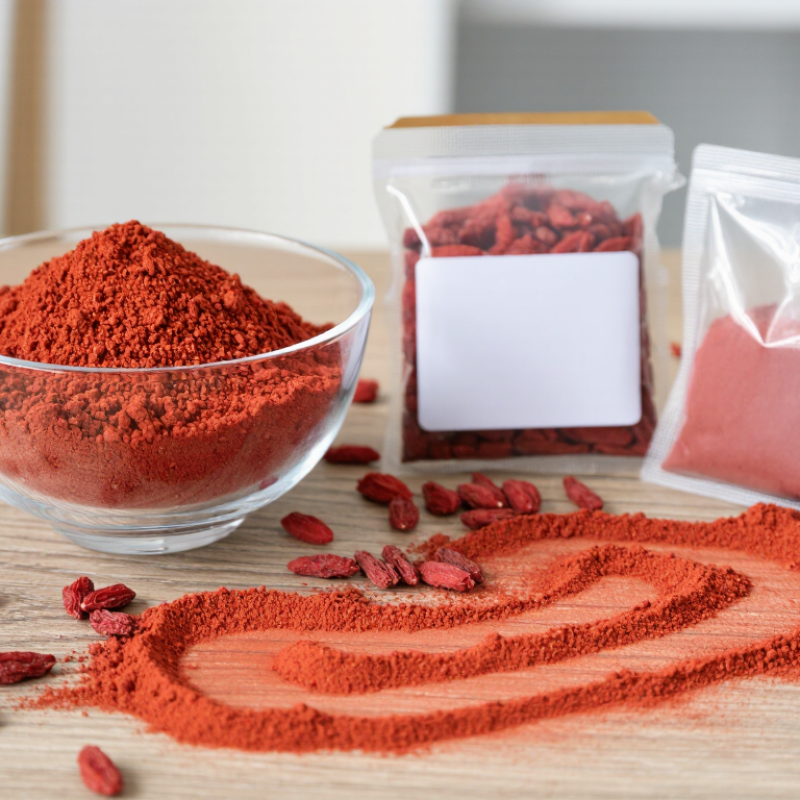
| Large-scale agricultural processor | Northwestern China, particularly established goji-growing areas in Ningxia, Gansu, Qinghai, or Inner Mongolia | Conventional goji berry powder; fine or medium mesh; food and beverage ingredient grade | Moisture commonly specified at approximately 8–10% or below; mesh size often selected between 60 and 100 mesh; color, flavor, pesticide residues, heavy metals, and microbiological limits agreed by contract | 20–25 kg kraft bag PE inner liner 25 kg fiber drum Private-label cartons | Commercial invoice, packing list, bill of lading, certificate of origin, and certificate of analysis. A phytosanitary certificate may be required by the destination country. Confirm food-facility registration and importer requirements before shipment. | Approximately 2–6 weeks after specification approval and deposit; seasonal availability can affect scheduling | Suitable for full-container or consolidated ocean freight. Keep the product dry and protected from heat, direct sunlight, odors, and condensation during transit. | Verify harvest year, lot traceability, drying method, pesticide-residue report, microbiological testing, allergen statement, and sample-to-batch consistency. |
| Organic-certified ingredient processor | Certified organic production zones in China or other approved agricultural regions | Organic Goji Berry Powder for supplements, functional foods, and natural-product formulations | Organic status must be supported by a valid certificate covering the relevant scope and transaction. Product specifications normally include moisture, mesh, microbiological limits, pesticide screening, heavy metals, and identity testing. | Food-grade lined bags Fiber drums Vacuum-packed inner bags | Organic certificate, transaction certificate where applicable, certificate of analysis, traceability records, certificate of origin, and export documentation. The buyer should confirm that the certification is accepted in the destination market. | Approximately 3–8 weeks, depending on certification review, production planning, and laboratory release | Use moisture-barrier packaging and avoid mixed loading with strong-smelling goods. Organic claims must remain consistent across product, packaging, shipping documents, and marketing materials. | Check certificate validity, certifying body, covered facility, covered product, lot number, ingredient list, and segregation controls between organic and conventional materials. |
| Contract manufacturer for private-label products | Major food-processing and nutraceutical manufacturing clusters in Asia | Retail-ready powder, sachets, jars, pouches, capsules, or blended functional-food products | Formulation, serving size, mesh, flavor profile, color, and nutritional declaration are normally customized. Finished-product specifications should include net weight, seal integrity, shelf-life target, and batch coding. | Stand-up pouch Screw-cap jar Single-serve sachet Bulk liner bag | Product specification, approved artwork, certificate of analysis, ingredient statement, allergen declaration, stability or shelf-life evidence, and destination-market labeling review. | Approximately 6–12 weeks, including artwork approval, packaging procurement, production, and quality release | Packaging dimensions influence carton count, pallet configuration, container utilization, and freight cost. Confirm whether packaging materials are sourced locally or require buyer-supplied artwork and components. | Review minimum order quantity, change-control procedures, packaging proofs, retained-sample policy, complaint handling, and ownership of artwork and formulas. |
| Small-batch specialty processor | Regional growing areas with traceable farms and limited-volume processing capacity | Small-batch powder emphasizing origin, low-volume production, or specialty processing | Specifications may be more flexible but should still define moisture, mesh, color, taste, microbiological criteria, pesticide residues, heavy metals, and foreign-matter limits. | 5–10 kg bags 10–25 kg cartons Small fiber drums | Certificate of analysis, lot traceability, ingredient declaration, country of origin, and any applicable food-safety or organic documentation. Testing frequency should be agreed before purchase. | Approximately 2–5 weeks when raw material is available; replenishment may be slower outside the harvest cycle | More suitable for pilot orders, premium products, and market testing than continuous high-volume supply. Consolidation with other cargo may reduce freight cost for smaller shipments. | Confirm processing capacity, backup raw-material sources, minimum order quantity, annual availability, and ability to maintain the same specification across lots. |
| Export-oriented bulk ingredient supplier | Established export hubs serving North America, Europe, the Middle East, and Asia-Pacific markets | Bulk goji berry powder for beverage, bakery, snack, supplement, and ingredient manufacturers | Contract specifications commonly cover moisture, mesh, bulk density, water activity where relevant, microbiology, pesticide residues, heavy metals, and foreign matter. Buyer-specific limits should take precedence over general market practice. | 20–25 kg lined bags 500–1,000 kg big bags Palletized export cartons | Commercial invoice, packing list, bill of lading or airway bill, certificate of origin, certificate of analysis, and destination-specific import documents. HS classification should be confirmed with a customs broker because powder classification may differ by formulation and jurisdiction. | Approximately 3–7 weeks, excluding customs clearance and destination-port delays | Ocean freight generally offers the lowest cost per kilogram for commercial volumes. Air freight is faster but significantly more expensive and is usually reserved for samples or urgent replenishment. | Check Incoterms, payment terms, insurance responsibility, port routing, customs broker requirements, demurrage exposure, and contingency plans for delayed shipments. |
| Specialized freeze-dried or low-temperature processor | Processing centers with controlled-temperature drying and higher-value ingredient capabilities | Freeze-dried or low-temperature goji powder for premium nutrition and functional-food applications | Specifications should include moisture, water activity, reconstitution behavior, color retention, particle size, microbiological limits, and protection against oxidation. Processing method should be stated on the technical data sheet. | High-barrier foil bag Nitrogen-flushed pouch Light-resistant drum | Certificate of analysis, processing declaration, packaging specification, shelf-life evidence, allergen statement, origin documentation, and any required food-safety records. | Approximately 4–8 weeks because of specialized processing, testing, and packaging requirements | Barrier packaging is important for oxygen, moisture, and light protection. Storage and transport should follow the supplier’s temperature and humidity recommendations. | Compare active processing parameters, yield, color stability, water activity, packaging barrier performance, and real-time or accelerated shelf-life evidence. |