What Are the Top Medical Oxygen Mask Suppliers Worldwide?

Medical oxygen is not an ordinary medical commodity. It is a life-support resource, delivered through equipment that must fit, function, and remain dependable. This is why identifying the top Medical Oxygen Mask suppliers worldwide requires more than comparing prices or catalogue images. Buyers must examine material quality, oxygen flow compatibility, mask design, packaging, traceability, and documented quality systems. Small details matter. A loose edge can reduce comfort. Unclear tubing specifications can create avoidable risks.

The World Health Organization has repeatedly described oxygen as an essential medicine, while WHO and UNICEF reports continue to highlight unequal access to reliable oxygen services in many low- and middle-income countries. Industry analyses from Grand View Research and Fortune Business Insights also indicate steady growth in respiratory-care and oxygen-delivery equipment, driven by ageing populations, chronic respiratory disease, emergency care, and home treatment. However, market growth does not automatically prove supplier reliability. That assumption deserves caution.

As WHO Health Emergencies Executive Director Dr. Mike Ryan has stated, “Oxygen is a medicine, and it should be treated as such.” His observation gives this supplier review a practical foundation. The strongest manufacturers should demonstrate consistent production, clinically appropriate designs, transparent certifications, and responsive after-sales support. They should also explain where products are made and how quality is verified. No supplier is perfect. Performance can vary between models, regions, and purchasing channels. This guide therefore compares worldwide Medical Oxygen Mask suppliers through evidence, professional standards, user experience, and real procurement considerations.
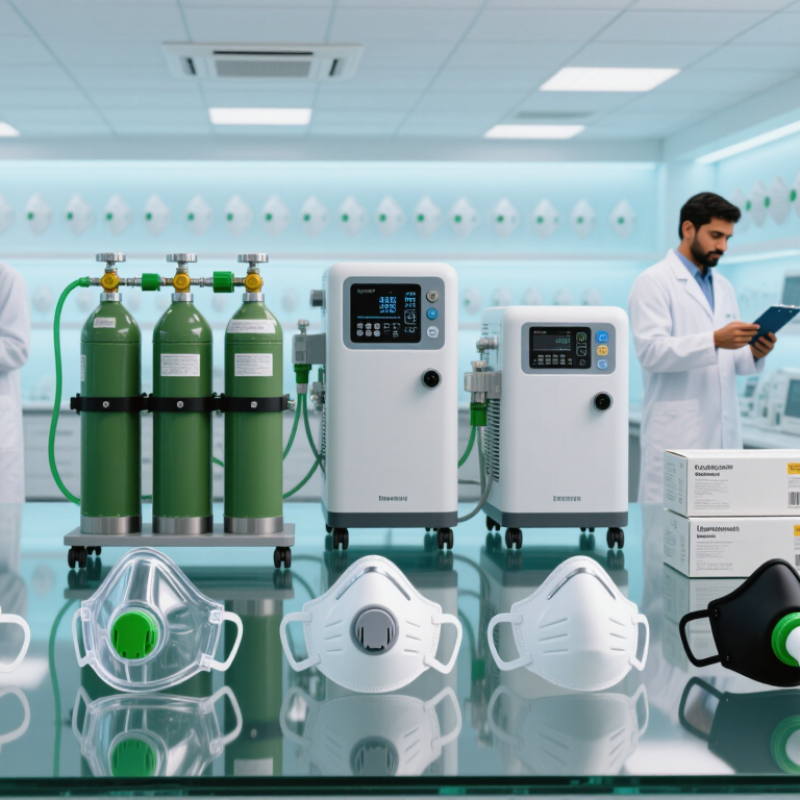
What Are the Top Medical Oxygen Mask Suppliers Worldwide?

What Medical Oxygen Masks Are and How They Work

Medical oxygen masks deliver supplemental oxygen through the nose and mouth. They connect to a flowmeter, tubing, and a regulated oxygen source. The mask’s shape creates a temporary chamber, allowing each breath to mix with supplied gas. Most models use soft edges and adjustable straps for a stable seal. A correct fit matters.

A simple mask provides moderate oxygen concentrations when connected to an appropriate flow rate. A non-rebreather mask adds a reservoir bag and one-way valves. The bag stores oxygen between breaths, while valves reduce inhaled room air and exhaled gas. A Venturi-style mask uses calibrated adapters to deliver a more controlled oxygen concentration. This design can support patients who need precise oxygen therapy. Masks do not generate oxygen. The source and flow setting determine performance.

In clinical practice, staff check breathing effort, skin color, comfort, oxygen saturation, and equipment connections. They also watch for leaks, condensation, pressure points, and rising distress. A loose mask may waste oxygen; an overly tight strap may irritate skin. Oxygen therapy should follow an assessment, not guesswork. It is easy to overtrust a mask. A mask cannot correct every cause of low oxygen, and readings need clinical context. Small details, such as a displaced valve or empty reservoir, can change its function quickly. Real-world use is rarely perfect.

Key Standards for Evaluating Global Oxygen Mask Suppliers

What Are the Top Medical Oxygen Mask Suppliers Worldwide?

Evaluating global oxygen mask suppliers requires more than comparing prices or catalog images.

A reliable supplier should demonstrate a controlled quality system, such as ISO 13485 certification, with clear production records. Certificates must be current and verifiable. Ask for evidence.

The mask should be assessed for oxygen flow performance, leakage, tubing strength, connector compatibility, and patient comfort.

Materials that contact skin may require documented biological safety testing under applicable standards.

Transparent labeling should identify size, intended use, storage conditions, lot number, and expiration date. Traceability matters.

A supplier should explain how it manages raw materials, inspections, packaging, and product recalls.

Regulatory readiness is also essential.

Suppliers should provide technical files, test reports, declarations, and registration documents required in each target market.

Their manufacturing site should support independent audits, not only scheduled presentations.

Post-market support matters when hospitals report damaged packaging, poor fit, or inconsistent tubing.

Response time should be measurable.

Delivery capability deserves practical attention.

Check whether sterile or clean packaging remains intact after long-distance transport.

Review sampling plans and acceptance criteria before signing a contract.

A low price can hide weak inspection controls.

However, a certificate alone cannot prove consistent product quality.

No checklist is perfect.

I would also review complaint trends, worker training, and production changes. Those details often reveal more than polished sales materials.

Leading Medical Oxygen Mask Suppliers by Region and Product Range

Medical oxygen mask suppliers vary significantly by region, manufacturing depth, and clinical focus. North American suppliers often emphasize traceability, hospital procurement support, and broad ranges for emergency departments and home-care providers. European manufacturers commonly highlight ergonomic design, recyclable materials, and documented performance testing. Regulatory expectations differ, so buyers should review current certifications and technical files rather than trust a catalog statement.

Asia-Pacific suppliers frequently offer high-volume production, competitive packaging options, and extensive disposable product lines. Their ranges may include standard oxygen masks, non-rebreather masks, Venturi masks, pediatric sizes, and oxygen tubing. Some factories also provide customized connectors, color coding, and sterile packaging. Latin American, Middle Eastern, and African distributors may focus more on flexible quantities, regional warehousing, and dependable delivery to hospitals with limited storage.

Fit matters. A mask should seal gently without creating pressure points around the nose and cheeks. Clinicians should check oxygen-flow compatibility, reservoir behavior, tubing security, and patient age range. Suppliers with documented batch records and responsive technical teams deserve closer attention. Yet regional labels can mislead. A large product range does not guarantee consistent quality across every item. I would request samples, inspect packaging, and compare instructions before committing. Even a familiar design may perform poorly on a narrow face or with a restless patient. Practical trials often reveal weaknesses that polished brochures hide.

What Are the Top Medical Oxygen Mask Suppliers Worldwide? - Leading Medical Oxygen Mask Suppliers by Region and Product Range

Region Common Supplier Segment Typical Product Range Primary Care Settings Common Regulatory Route Typical Supply Strength Procurement Considerations
North America Large medical-device manufacturers, respiratory-care distributors, and hospital-supply wholesalers Standard oxygen masks, non-rebreather masks, aerosol masks, nebulizer masks, adult, pediatric, and infant sizes Hospitals, emergency departments, ambulances, long-term-care facilities, and home-care providers U.S. FDA medical-device requirements, applicable 510(k) pathways, and Health Canada licensing requirements Broad catalog coverage, established distribution networks, private-label programs, and recurring hospital contracts Verify FDA or Canadian authorization, latex status, tubing length, oxygen-flow compatibility, and emergency-stock capacity
Western Europe Specialized respiratory-care suppliers, hospital procurement groups, and EU medical-device distributors Fixed-concentration Venturi masks, standard oxygen masks, non-rebreather masks, tracheostomy masks, and pediatric variants Acute-care hospitals, respiratory wards, operating theatres, ambulance services, and community care EU Medical Device Regulation (EU) 2017/745, CE marking where applicable, and ISO 13485 quality systems Strong documentation practices, multilingual packaging, reliable regional logistics, and standardized product specifications Check the EU economic operator, declaration of conformity, UDI information, sterilization status, and local-language labeling
United Kingdom NHS-oriented distributors, respiratory-equipment suppliers, and contract medical-device manufacturers Oxygen masks, non-rebreather masks, Venturi systems, aerosol masks, and oxygen tubing sets NHS hospitals, private hospitals, ambulance services, care homes, and home oxygen services UK Medical Devices Regulations 2002, UKCA requirements where applicable, and MHRA registration rules Strong public-sector tender experience, dependable domestic distribution, and standardized clinical packaging Confirm MHRA registration, applicable conformity marking, NHS tender eligibility, and continuity of supply
East Asia High-volume medical-device producers, domestic distributors, and export-oriented OEM manufacturers Disposable oxygen masks, non-rebreather masks, pediatric and infant masks, nebulizer masks, and customized tubing sets Hospitals, clinics, emergency transport, home-care channels, and international wholesale markets National requirements administered by authorities such as NMPA in China, PMDA/MHLW in Japan, and MFDS in South Korea High-volume production, flexible OEM specifications, competitive unit pricing, and broad export capability Audit manufacturing controls, confirm export documentation, evaluate batch consistency, and request samples before volume orders
South Asia Domestic medical-supply manufacturers, public-sector tender suppliers, and export-focused disposable-device producers Standard oxygen masks, non-rebreather masks, pediatric masks, oxygen tubing, and basic nebulizer masks Public hospitals, private hospitals, clinics, ambulance providers, and humanitarian-health programs National medical-device rules, including CDSCO requirements in India, plus ISO 13485 certification for many export programs Cost-efficient manufacturing, adaptable order quantities, and growing export and institutional-supply capacity Assess incoming-material controls, packaging integrity, product traceability, delivery reliability, and tender documentation
Southeast Asia Regional distributors, disposable medical-device factories, and contract manufacturers serving global buyers PVC or soft-material oxygen masks, non-rebreather masks, Venturi masks, pediatric sizes, and oxygen-delivery accessories Hospitals, outpatient clinics, emergency services, home-care providers, and medical-export markets Local authority registration, ASEAN medical-device frameworks where adopted, and destination-market approvals for exports Competitive production, contract manufacturing flexibility, and access to regional shipping routes Confirm country-of-origin rules, humidity-resistant packaging, production lead times, and export-market compliance
Middle East Importers, hospital-equipment distributors, and regional healthcare procurement companies Standard oxygen masks, non-rebreather masks, Venturi masks, aerosol masks, and adult and pediatric configurations Government hospitals, private hospital groups, ambulance fleets, clinics, and disaster-response services National health-authority registration, GCC-related conformity requirements where applicable, and recognized international approvals Strong import coordination, institutional tender expertise, and regional warehousing in major healthcare hubs Check import permits, Arabic labeling requirements, heat-resistant storage conditions, and distributor authorization
Latin America National distributors, hospital-supply wholesalers, and local representatives for international manufacturers Disposable oxygen masks, non-rebreather masks, Venturi masks, nebulizer masks, and pediatric products Public and private hospitals, emergency transport, clinics, home-care channels, and humanitarian programs Country-specific registration, including ANVISA in Brazil and applicable requirements of other national health authorities Established distributor networks, localized tender support, and mixed domestic-import supply models Verify registration status, Spanish or Portuguese labeling, customs lead times, and after-sales documentation
Africa Medical-aid suppliers, hospital distributors, regional wholesalers, and international procurement contractors Basic oxygen masks, non-rebreather masks, pediatric masks, oxygen tubing, and durable oxygen-delivery accessories Public hospitals, rural clinics, emergency programs, mobile medical units, and humanitarian operations National registration where required, recognized international conformity documentation, and procurement specifications from aid agencies Bulk-order capability, project-based logistics, donor-funded procurement support, and products suited to resource-limited settings Prioritize rugged packaging, verified clinical specifications, shelf-life documentation, local warehousing, and dependable replenishment
Oceania Hospital-distribution companies, respiratory-care suppliers, and importers serving Australia and New Zealand Standard oxygen masks, non-rebreather masks, Venturi masks, tracheostomy masks, and pediatric sizes Public hospitals, private healthcare networks, ambulance services, aged-care facilities, and home-care providers TGA requirements in Australia, Medsafe requirements in New Zealand, and applicable international conformity evidence Well-organized healthcare distribution, strong clinical documentation, and dependable institutional procurement processes Confirm local sponsor or supplier obligations, product listing status, freight planning, and regional stock availability

Note: Product availability, regulatory status, and supplier capabilities vary by country. Buyers should verify current registrations, conformity documents, clinical specifications, and distribution authorization before purchase.

How Suppliers Support Hospitals, Emergency Care, and Home Therapy

What Are the Top Medical Oxygen Mask Suppliers Worldwide?

Leading medical oxygen mask suppliers support hospitals through reliable products, technical guidance, and responsive logistics. Hospitals need dependable masks for routine wards, intensive care, and patient transport. Suppliers provide different designs, including simple masks, reservoir masks, and adjustable options. Clinicians select the correct type according to the prescribed oxygen flow and patient condition. Experienced suppliers also explain tubing connections, mask fit, and storage requirements. Clear labeling matters. A poor seal can waste oxygen and increase patient discomfort. Suppliers should provide material specifications, lot traceability, and quality documentation. These details help purchasing teams check deliveries and manage clinical risks.

Emergency departments need speed without sacrificing quality. Suppliers may maintain regional warehouses, flexible order quantities, and emergency shipment channels. They can also support hospitals with product training and replacement planning. However, rapid delivery is not enough. Staff must still verify packaging, connectors, and usability before deployment. A lower price can appear attractive, but inconsistent sizing may create hidden costs. No supplier is perfect, and hospitals should review performance regularly.

Tips: Ask about compliance records, quality controls, delivery times, and after-sales support. Request samples for fit testing before large orders. Check whether masks suit common oxygen systems used in your facility.

Home therapy requires simple instructions and comfortable materials. Suppliers support patients through clear packaging, caregiver guidance, and accessible replacement schedules. Lightweight masks may improve tolerance during sleep or extended use. Suppliers should avoid making treatment promises. Clinicians remain responsible for oxygen settings and patient assessment. Feedback from patients can reveal problems that specifications miss. A mask may meet standards yet still feel uncomfortable after several hours.

What Buyers Should Compare Before Choosing a Global Supplier

Choosing a medical oxygen mask supplier requires more than comparing catalog prices. Buyers should examine mask sizes, connector fit, tubing length, and material consistency. A hospital team can request samples and inspect clarity, flexibility, and edge comfort under gloves. Ask for batch records, inspection results, and traceability codes. These details show whether quality is managed routinely, not only during sales discussions. Supplier experience matters too. Review production capacity, complaint handling, and evidence of serving comparable clinical environments.

Documentation deserves equal attention. Confirm applicable quality certifications through current, verifiable records, not copied logos or outdated files. Check product specifications, sterilization status, shelf life, and packaging integrity. For international purchasing, compare export experience, lead times, customs paperwork, and backup production plans. A supplier may promise fast delivery, yet a port delay can disrupt oxygen therapy. Ask how shortages are communicated and how urgent orders are prioritized. Clear answers are more valuable than polished presentations.

Cost comparisons should include freight, testing, training, replacement rates, and minimum order quantities. A cheaper mask can become expensive when connectors leak or cartons arrive damaged. Evaluate response time with a few realistic questions. No scorecard is perfect. I still recommend recording every assumption, especially for demand forecasts and emergency stock. Buyers should also check whether staff can open packaging easily and connect the mask without confusion. Small usability problems can matter beside a patient’s bed. Independent clinical and regulatory review remains wise before approval.

TOP