
- Hospital Furniture
- Neonatal Care Product
- Operating Surgical Tables
- Orthopedic Implants
- Surgical Operating Led Lights
- Orthopedic External Fixators
- Laryngoscopes
- Orthopaedic Power Tools
- Medical Disposables
- Hospital Clothing
- Anaesthesia Products
- Autoclaves & Sterilizers
- Hospital Holloware
- Suction Units
- Rehabilitation Aids
- Stethoscopes
- Anesthesia Machine & Ventilators
- Cold Chain Equipment
- Electro Medical Equipments
- Orthopedic Instruments
- Surgical Operating Led Lights
- Physiotherapy products
What Is a Veterinary Plastic Steel Syringe?
A Veterinary Plastic Steel Syringe combines a lightweight plastic body with a durable steel component, usually a needle, tip, or internal fitting. This design supports controlled fluid delivery during routine veterinary care. It may be used for medication, vaccination, flushing, or other procedures approved by a qualified veterinary professional.
The term can be confusing. It does not always describe one standardized product. Manufacturers may use it for different syringe constructions, sizes, and attachment systems. Therefore, buyers should inspect the barrel markings, seal quality, needle connection, and sterilization guidance. A clear scale matters. So does a smooth plunger.
Animal comfort matters too. “The best way to handle animals is to understand them,” animal-handling expert Temple Grandin has said. Her principle applies directly here. A syringe is not only a medical tool. It also affects restraint, movement, stress, and handler confidence. A nervous dog may react to a sudden needle movement. A horse may respond to pressure, noise, or poor positioning.
In practical use, veterinarians evaluate accuracy, grip, visibility, durability, and compatibility with prescribed solutions. Plastic can reduce weight and improve visibility. Steel can provide strength where repeated handling demands it. Yet neither material guarantees safe performance. Incorrect sizing, damaged seals, or careless reuse can create preventable problems. That part is easy to overlook.
This guide explains what a Veterinary Plastic Steel Syringe is, how its parts work, and what users should examine before selection. It also recognizes an important limitation: product terminology varies. Always follow the manufacturer’s instructions and the attending veterinarian’s judgment.
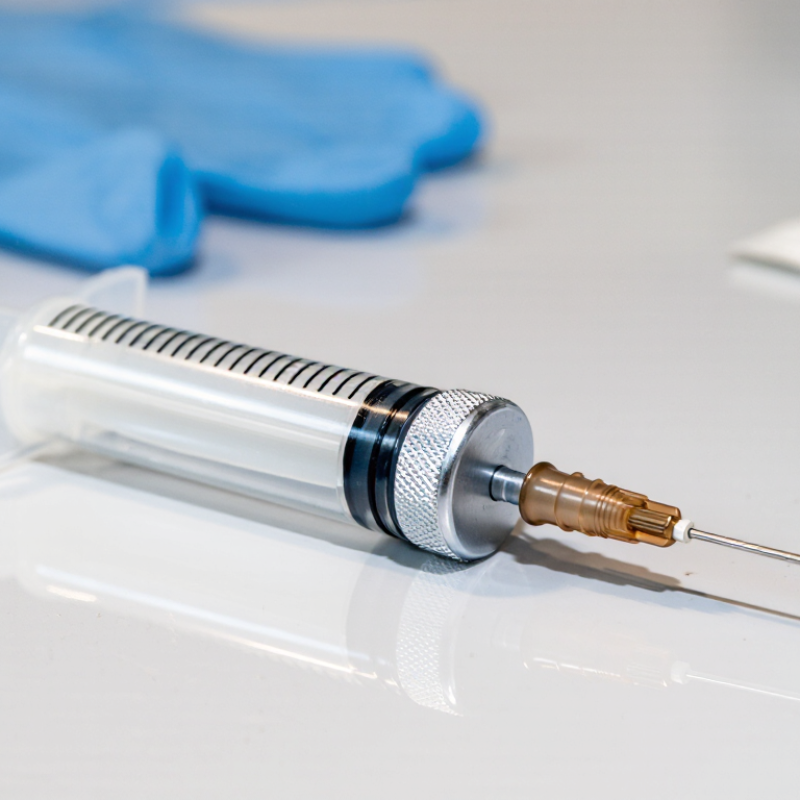
Table of Contents [Hide]
Definition and Basic Purpose of a Veterinary Plastic Steel Syringe
A veterinary plastic steel syringe usually means a syringe with a clear plastic barrel and a stainless-steel needle or tip. The term is practical, not a universal technical classification. Its basic purpose is accurate fluid delivery in animal care. Veterinarians may use it for vaccines, prescribed medicines, or measured flushing solutions. The barrel helps staff see the dose clearly. The steel needle provides strength and controlled penetration. Needle size must match the animal, injection route, and solution thickness.
WHO injection-safety guidance has cited about 16 billion injections worldwide each year. That figure concerns human healthcare, but it highlights a shared requirement: clean technique and reliable equipment matter. In veterinary practice, a damaged barrel can leak. A loose needle can cause painful movement. I have also seen dose markings misunderstood when staff work quickly. That small error deserves more attention than it receives.
Tips:
Check the graduation marks before drawing fluid. Confirm needle attachment and inspect the seal. Use sterile, single-use components when required by the treatment protocol. Never assume a “plastic steel” syringe is automatically suitable for every medication. Veterinary teams should follow the product instructions, local rules, and professional guidance from bodies such as WOAH. Record the animal, dose, route, and time. A simple record can reveal repeated technique problems.


