
- Hospital Furniture
- Neonatal Care Product
- Operating Surgical Tables
- Orthopedic Implants
- Surgical Operating Led Lights
- Orthopedic External Fixators
- Laryngoscopes
- Orthopaedic Power Tools
- Medical Disposables
- Hospital Clothing
- Anaesthesia Products
- Autoclaves & Sterilizers
- Hospital Holloware
- Suction Units
- Rehabilitation Aids
- Stethoscopes
- Anesthesia Machine & Ventilators
- Cold Chain Equipment
- Electro Medical Equipments
- Orthopedic Instruments
- Surgical Operating Led Lights
- Physiotherapy products
Why Buy a Racket Restringing Machine?
Why Buy a Racket Restringing Machine?
For serious players, string tension is not a minor detail. It changes power, control, comfort, and confidence during every rally. A Restringing Rackets Machine gives players and coaches greater control over this essential part of racket performance. Instead of waiting several days at a local shop, you can restring a racket when its strings feel loose, uneven, or worn. That convenience matters before tournaments, intensive training sessions, or important club matches.
A quality machine also supports consistency. You can select a preferred tension, follow a repeatable process, and compare results over time. Experienced stringers learn to inspect grommets, secure the frame, and adjust tension carefully. Small details matter. A poorly mounted racket can suffer unnecessary stress, while careless handling may produce inconsistent string beds. Reliable machines usually offer stable supports, accurate tension settings, and practical adjustment controls. However, owning one does not instantly create expertise. Practice is still required.
There is also a financial argument. Frequent players may recover the machine’s cost through repeated restringing, especially when several rackets need maintenance. Families, clubs, and coaches may gain even more value. Still, the calculation is not perfect. String, tools, maintenance, and learning time add expense. Some users may discover that professional service remains more practical. That is an honest limitation. The best reason to buy a restringing machine is not simply saving money. It is gaining control, developing a useful skill, and keeping equipment ready for the next demanding point.
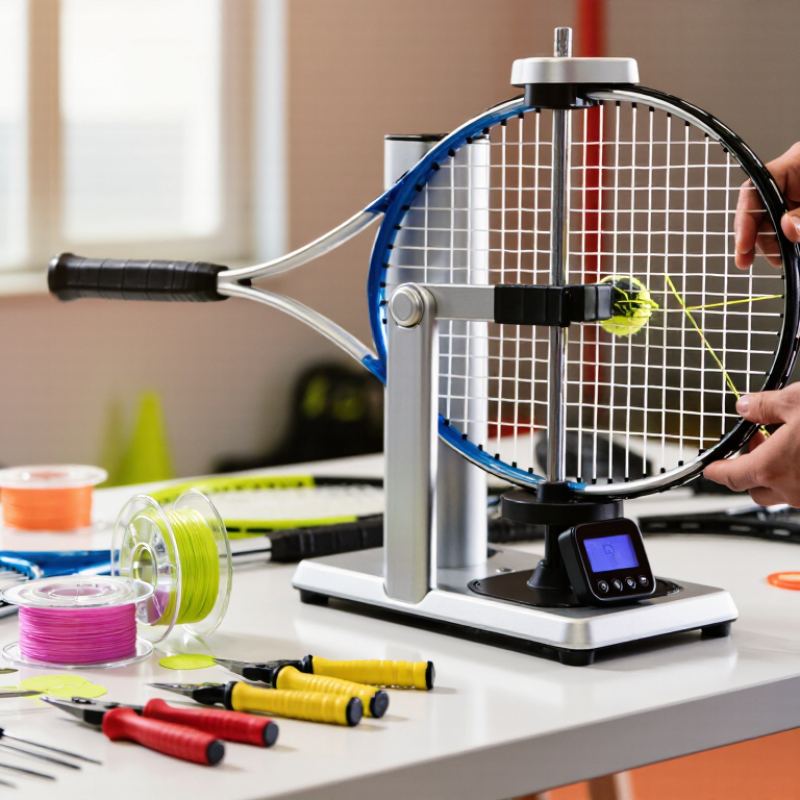
Table of Contents [Hide]
What a Racket Restringing Machine Does
A racket restringing machine holds the frame securely while guiding string through its holes. Its main job is applying controlled tension to each string. This creates a more predictable string bed for play. The machine also uses clamps to keep tension from escaping between pulls. Small adjustments matter.
During restringing, the operator mounts the racket, checks its position, and follows the planned string pattern. A turntable helps the frame rotate smoothly. Tension controls let the user select different settings for mains and crosses. Some machines use a crank, while others use an electronic pulling system. Both can work well when handled carefully and checked regularly.
In my experience, a machine improves consistency, but it cannot correct careless technique. Uneven clamping may mark the string or change the final tension. Poor mounting can place unnecessary stress on the frame. Calibration also deserves attention. A setting on the display is not always the tension actually delivered. I once trusted a familiar setting too quickly and noticed a softer result than expected. That mistake showed me why test pulls and written records are useful. String type, gauge, temperature, and playing style can all influence the outcome. The machine provides control. The operator still provides judgment.


