
- Hospital Furniture
- Neonatal Care Product
- Operating Surgical Tables
- Orthopedic Implants
- Surgical Operating Led Lights
- Orthopedic External Fixators
- Laryngoscopes
- Orthopaedic Power Tools
- Medical Disposables
- Hospital Clothing
- Anaesthesia Products
- Autoclaves & Sterilizers
- Hospital Holloware
- Suction Units
- Rehabilitation Aids
- Stethoscopes
- Anesthesia Machine & Ventilators
- Cold Chain Equipment
- Electro Medical Equipments
- Orthopedic Instruments
- Surgical Operating Led Lights
- Physiotherapy products
Why Use a Lead Apron for Radiation Protection?
A lead apron is a familiar symbol of radiation protection, but its purpose deserves a closer look. In fluoroscopy rooms, the apron can reduce scatter reaching the torso when staff must remain near the patient. It may also support protection during selected diagnostic procedures. However, it does not replace distance, shielding, exposure-time control, or careful positioning. A practical approach combines all four.
Radiation-protection expert Dr. David Brenner has stated, “There is no threshold below which radiation is completely safe.” This reminder encourages responsible protection, without creating unnecessary fear. A properly fitted lead apron should cover the front of the body, remain closed, and receive regular visual inspections. Creases, cracks, or poor storage can weaken its protective performance. Hang it carefully. Never fold it.
The best choice depends on the procedure, workload, and position of the professional. Some current guidance questions routine apron use when staff stand behind effective structural barriers. Other situations still require personal protective equipment. That distinction matters. A heavy apron can also cause shoulder, back, and neck strain during long procedures. Protection must consider both radiation exposure and physical comfort.
This topic is less simple than it appears. A lead apron is useful, but it is not a complete safety strategy. Reliable protection comes from trained judgment, equipment checks, documented protocols, and continuous review. Even experienced teams can overlook small details, such as an open side panel or an apron stored incorrectly. Good radiation safety remains practical, evidence-based, and willing to improve.
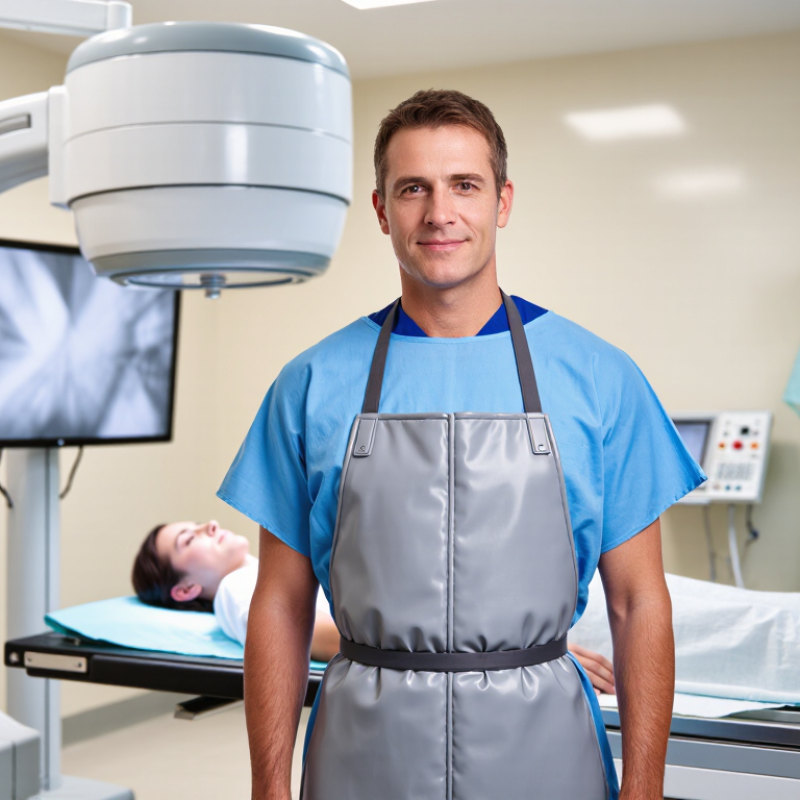
Table of Contents [Hide]
What Radiation Is and Why It Requires Protection
Why Use a Lead Apron for Radiation Protection?
What Radiation Is and Why It Requires Protection
Radiation is energy moving through space or matter. Medical imaging commonly uses ionizing radiation, including X-rays and gamma rays. These forms carry enough energy to change atoms inside living tissue. The effect depends on dose, exposure time, distance, and the body area receiving radiation. Small exposures are carefully managed, but repeated exposure can increase long-term risk.
A lead apron helps reduce scattered X-rays during certain diagnostic procedures. It places a dense protective layer between radiation and sensitive organs, such as the reproductive organs or thyroid. The apron does not block every beam. It also cannot replace distance, short exposure times, or proper shielding. That distinction matters.
In a clinical setting, trained imaging professionals assess whether an apron is appropriate. They check its condition, fit, and position before use. Cracks or folds can weaken its protection. An apron is not a magical barrier. That sounds obvious, yet people sometimes wear it incorrectly or assume thicker always means safer. Protection should follow the procedure, not fear alone. Modern imaging teams also use dose monitoring and the ALARA principle: keeping exposure as low as reasonably achievable while obtaining useful images. I would still question any routine that uses protective equipment without checking current guidance. Good radiation safety depends on informed decisions, careful technique, and honest attention to small details.


