How to Find Reliable Orthopedic Implant Suppliers?

Choosing reliable orthopedic implant suppliers is not a simple purchasing exercise. It is a patient-safety decision.

A dependable supplier should provide traceable materials, consistent manufacturing, and clear technical documentation. Their products should match the intended surgical application and clinical requirements. Look for evidence of quality systems, validated production processes, and appropriate regulatory compliance. Do not rely on attractive pricing alone.

Sir John Charnley, a pioneer of modern joint replacement, observed, “The surgeon who wishes to be successful must be prepared to spend as much time in the laboratory as in the operating theatre.” His words remain relevant when evaluating orthopedic implants. Serious suppliers should welcome technical questions, share testing evidence, and explain design limitations without vague promises.

Ask about alloy composition, coating performance, sterilization methods, packaging integrity, and shelf-life controls. Request batch traceability and investigate how the supplier handles complaints or product changes. Site audits can reveal details that brochures often hide, such as poor storage conditions or inconsistent labeling.

Experience matters.

Speak with surgeons, hospital procurement teams, and biomedical engineers who have used the products. Their feedback may expose delivery delays, difficult instrumentation, or unexpected revision concerns. Still, testimonials are not proof. They must support, not replace, objective verification.

The process is rarely perfect. A supplier with excellent documentation may lack local support. Another may offer strong service but limited clinical evidence. That trade-off deserves careful review. Reliable decisions come from comparing evidence, asking uncomfortable questions, and documenting every conclusion. Ultimately, the best orthopedic implant supplier is not merely a seller. It is a transparent, technically capable partner focused on predictable patient outcomes.
How to Find Reliable Orthopedic Implant Suppliers?

Define Your Orthopedic Implant Requirements and Quality Standards

Reliable orthopedic implant sourcing begins with a precise product definition. Describe the anatomy, surgical approach, fixation method, and expected patient activity. Specify dimensions, materials, surface treatment, and compatible instruments. A vague request creates avoidable risks.

Quality standards should be measurable. Request material certificates, dimensional inspection records, sterilization validation, packaging details, and lot-level traceability. Review fatigue, tensile, and corrosion test results when relevant. Confirm that the supplier maintains a documented quality management system and follows applicable regulatory requirements. Ask how nonconforming products are isolated and investigated.

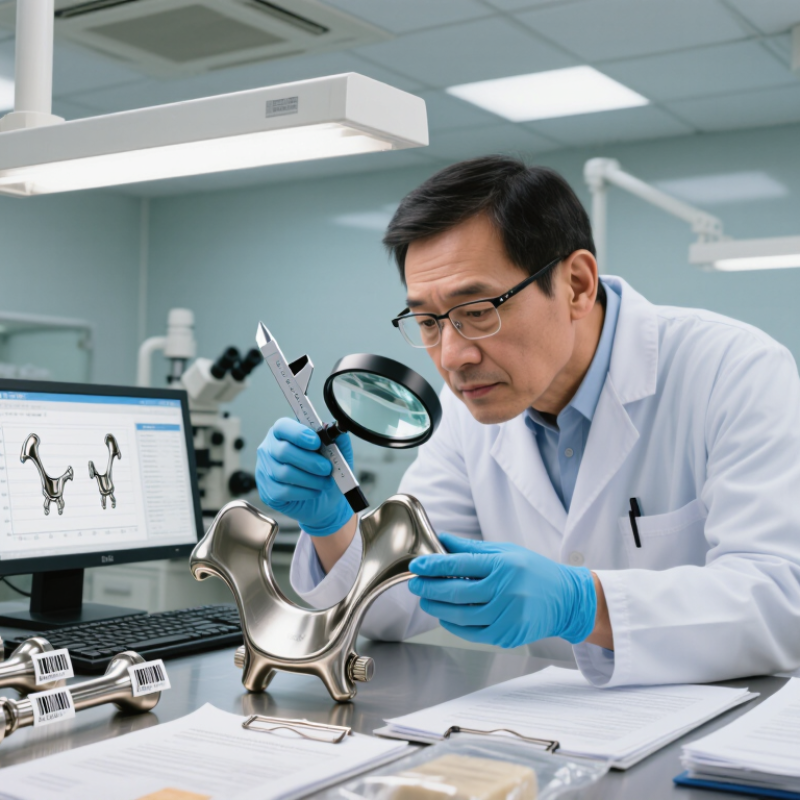
Supplier evaluation should include technical communication and production evidence. Examine sample implants under magnification for burrs, scratches, or uneven finishing. Check whether critical dimensions match approved drawings. A factory audit can reveal cleanroom practices, calibration controls, and staff training that documents may hide. Do not rely on certificates alone. They support confidence, but they do not replace verification.

A practical specification sheet should include acceptance limits, inspection frequency, labeling requirements, and change-control procedures. It should also identify who approves design or material changes. This detail is easy to miss. A checklist helps, but it is not perfect. Clinical feedback, complaint trends, and post-market data may expose weaknesses after delivery. Keep reviewing the requirements as surgical techniques, patient needs, and applicable standards evolve.

How to Find Reliable Orthopedic Implant Suppliers?

Define Your Orthopedic Implant Requirements and Quality Standards

This suggested supplier-qualification model gives the greatest attention to product performance, regulatory compliance, quality-system maturity, material safety, and traceability. Before requesting quotations, buyers should define the implant type, anatomical application, materials, intended use, applicable testing, documentation, and acceptance criteria. Relevant references may include ISO 13485 for medical-device quality systems, ISO 10993 for biological evaluation, ISO 14630 for non-active surgical implants, ASTM implant-performance standards, and applicable national regulatory requirements.

Verify Supplier Credentials, Certifications, and Regulatory Compliance

Reliable orthopedic implant sourcing starts with evidence, not a polished catalogue. Ask for legal manufacturer details, site addresses, device classification, and certificate scope. ISO 13485 matters, but a certificate alone proves little. The ISO Survey 2022 recorded more than 30,000 ISO 13485 certificates worldwide. That scale makes verification essential. Confirm the issuing body, expiry date, covered facilities, and product categories directly.

Regulatory records should match the implant and destination market. Request applicable clearances, approvals, or conformity documents, then check identifiers in official databases. A mismatch between a femoral stem and a general orthopedic certificate is a serious warning. Review audit findings, recalls, complaint trends, and corrective actions. FDA’s 2023 MAUDE data contained millions of medical-device reports. These reports do not prove supplier failure. They reveal questions worth asking. Request batch traceability from raw-material heat numbers to final inspection.

During a site review, inspect cleanroom controls, calibration labels, sterile-barrier testing, and nonconforming-product areas. Request sample records with sensitive information removed. Strong suppliers explain deviations without defensiveness. Weak answers often sound memorized. I would also verify subcontractors, because certificate scope may exclude critical machining or sterilization work. Paperwork can look complete while process discipline remains inconsistent. Use independent audits, recent quality metrics, and hospital references before approval.

Evaluate Product Quality, Materials, Manufacturing, and Traceability

When evaluating an orthopedic implant supplier, start with product quality, not polished sales materials. Request inspection records, dimensional reports, sterilization data, and documented testing evidence. Ask how nonconforming parts are isolated. A clean sample is not enough. Examine implant surfaces, packaging seals, labeling, and consistency across production lots. Small differences can signal larger process problems.

Material selection should match the implant’s clinical purpose and expected mechanical load. Ask for material certificates, chemical composition results, and controls for titanium alloys, stainless steel, polymers, or coatings. Do not accept vague terms such as medical grade. Manufacturing deserves equal attention. Review machining controls, heat treatment records, surface finishing, cleaning, and environmental monitoring. If possible, audit the facility or use an independent technical assessor. Photos are useful, but they cannot replace direct evidence.

Traceability should connect each implant to raw materials, equipment, operators, inspection results, and release approval. Test whether the supplier can retrieve this history quickly. Delays reveal weak systems. Check whether records are protected from casual changes and retained consistently. A practical review may uncover overlooked packaging components or undocumented rework. That gap deserves honest discussion, not automatic rejection. Supplier reliability grows through repeatable evidence, transparent answers, and willingness to correct mistakes.

Assess Clinical Evidence, Technical Support, and Customization Options

Reliable orthopedic implant suppliers should prove clinical value, not merely display attractive product catalogs. The UK National Joint Registry’s 21st Annual Report 2024 contains data from more than three million joint replacement procedures. Ask suppliers to provide registry evidence, peer-reviewed studies, and revision data for comparable patient groups. Check follow-up periods, surgical volumes, and failure definitions. Short studies can look impressive. They may still hide late complications.

Technical support deserves equal scrutiny. Request named clinical specialists, operating-room training records, surgical guides, and documented response times. A dependable supplier should explain instrument compatibility, sterilization limits, lot traceability, and complaint handling. The FDA’s Medical Device Reporting data shows why post-market surveillance matters: device problems can emerge after commercial launch, not only during approval. Review field-safety notices and corrective-action histories before signing a contract.

Customization can improve fit, but it also increases validation demands. Ask how CT or MRI files are transferred, who approves the design, and how dimensional tolerances are checked. Confirm material certificates, software validation, sterilization validation, and final inspection records. ISO 13485:2016 emphasizes risk-based quality management across design and production. Still, certification alone is not clinical proof. I have seen technically elegant options create workflow delays when planning files arrive late. That weakness should be tested with a sample case, not promises. Measure planning time, revision requests, and surgeon support during a controlled evaluation.

How to Find Reliable Orthopedic Implant Suppliers? - Assess Clinical Evidence, Technical Support, and Customization Options

Evaluation Dimension Key Indicator Evidence or Data to Request Reliable-Supplier Benchmark Verification Method Suggested Weight
Clinical Evidence Clinical outcome data Peer-reviewed studies, post-market surveillance summaries, registry data, and clearly defined patient cohorts Evidence should identify implant design, follow-up period, sample size, complications, revision rate, and study limitations Check whether the evidence relates to the same indication, anatomical site, material, and fixation method 20%
Clinical Evidence Regulatory and conformity status Applicable approvals, declarations of conformity, device classification, intended-use statement, and certificate scope Documentation must match the exact implant family, manufacturing site, intended use, and target market Confirm certificate validity and scope through the relevant regulatory authority or accredited certification database 15%
Quality Management Manufacturing quality system Quality certificate, audit reports, nonconformance records, corrective-action procedures, and batch-release controls A quality system aligned with ISO 13485 is generally expected for medical-device manufacturing, with traceable corrective actions Audit the actual production site and verify that the certificate covers design, production, sterilization, or subcontracted processes as applicable 15%
Material Safety Biocompatibility and material traceability Material certificates, chemical composition, biocompatibility assessment, supplier controls, and lot traceability Material selection and biological evaluation should be justified according to the implant’s contact type, duration, and intended use Review testing and risk documentation against the applicable ISO 10993 biological-evaluation framework 10%
Technical Support Surgical planning and instrumentation support Surgical technique guides, instrument lists, sizing charts, training materials, and operating-room support policy Documentation should be procedure-specific, version-controlled, and supported by trained technical personnel Request a sample planning session and confirm training availability without relying on unsupported clinical claims 10%
Technical Support Response and complaint handling Service-level agreement, escalation contacts, complaint workflow, field-safety notification process, and response-time records Written acknowledgement within one business day for urgent technical or safety issues, with documented escalation and closure records Test the support process with technical questions and review anonymized complaint or corrective-action examples 10%
Customization Design and engineering capability CAD workflow, design-control procedure, tolerance capability, finite-element analysis approach, and design-review records Custom designs should pass documented requirements review, risk analysis, verification, validation, and change control before release Ask for a redacted design-history example and confirm ownership of drawings, specifications, and change approvals 10%
Customization Prototype-to-production transition Prototype validation plan, production-equivalence statement, inspection reports, sterilization plan, and packaging validation The released production process should be equivalent to the validated process, with defined acceptance criteria and lot release controls Compare prototype and production specifications, inspect first-article records, and verify packaging and sterilization documentation 5%
Supply Reliability Capacity, continuity, and lead time Capacity plan, critical-subcomponent list, average lead-time history, business-continuity plan, and inventory policy Lead times should be documented rather than promised verbally, with contingency plans for critical materials and process interruptions Compare quoted lead times with historical delivery data and assess the effect of single-source materials or subcontractors 5%
Total Suggested Evaluation Weight 100%
Practical decision rule: Select suppliers only after the evidence is verified for the exact product, indication, manufacturing site, and target market. A high score should not compensate for missing regulatory documentation, unresolved safety signals, inadequate traceability, or unsupported clinical claims.

Compare Pricing, Supply Reliability, Contracts, and After-Sales Service

How to Find Reliable Orthopedic Implant Suppliers?

Price deserves careful attention, but the lowest quote can hide serious costs. Compare unit prices, shipping fees, sterilization charges, and replacement policies. Ask for a detailed quotation with consistent specifications. A titanium component may look cheaper until custom packaging and urgent delivery are added. Request samples and inspect labeling, packaging quality, and documentation before placing a large order. Small details matter.

Supply reliability should be tested, not simply promised. Review production capacity, inventory practices, lead times, and previous delivery records. Ask how the supplier handles material shortages or sudden demand. A useful test is a small trial order. Record the confirmed date and actual arrival date. Delays reveal more than polished presentations. Still, one late shipment should not define the entire relationship.

Contracts should clearly cover quality standards, inspection rights, delivery schedules, payment terms, and remedies for nonconforming products. Avoid vague promises. After-sales service also needs practical evidence. Confirm response times, technical support, complaint procedures, and product traceability. Ask who answers calls after surgery-related concerns arise. I have seen teams focus heavily on price and overlook service access. That choice can become expensive. No supplier performs perfectly, so review meetings should examine failures honestly and improve the next agreement.

TOP