
- Hospital Furniture
- Neonatal Care Product
- Operating Surgical Tables
- Orthopedic Implants
- Surgical Operating Led Lights
- Orthopedic External Fixators
- Laryngoscopes
- Orthopaedic Power Tools
- Medical Disposables
- Hospital Clothing
- Anaesthesia Products
- Autoclaves & Sterilizers
- Hospital Holloware
- Suction Units
- Rehabilitation Aids
- Stethoscopes
- Anesthesia Machine & Ventilators
- Cold Chain Equipment
- Electro Medical Equipments
- Orthopedic Instruments
- Surgical Operating Led Lights
- Physiotherapy products
What Is a Surgical Instrument Set for Global Buyers?
A surgical instrument set is more than a box of polished steel. For global buyers, it is a controlled combination of instruments, packaging, traceability, sterilization compatibility, and clinical purpose. The phrase surgical all instruments can sound comprehensive, yet it may hide important differences. A general surgery set is not the same as an orthopedic, laparoscopic, or obstetric set. That distinction matters.
The World Health Organization’s Global Patient Safety Report 2024 identifies unsafe surgical care as a continuing patient-safety concern. Its findings reinforce a practical point: instrument selection affects workflow, decontamination, and procedural reliability. The CDC Guideline for Disinfection and Sterilization in Healthcare Facilities also stresses validated cleaning and sterilization processes. Buyers should therefore examine material grades, surface finish, joint construction, corrosion resistance, and compatibility with local sterilizers. A lower purchase price can become expensive after repeated repairs, missing pieces, or failed reprocessing cycles. It happens.
Surgeon and patient-safety expert Atul Gawande wrote in The Checklist Manifesto, “We have accumulated stupendous know-how. Yet avoidable failures continue to occur.” His observation applies directly to surgical set procurement. Experience shows that a complete-looking tray may still lack the right clamp, forceps profile, or replacement plan. Global buyers need documented specifications, sample-set inspections, supplier quality records, and clear after-sales support. They should also question assumptions. Does the set match local clinical practice? Can staff identify every instrument quickly? Are certificates current and verifiable? A reliable supplier answers these questions with evidence, not attractive photographs.
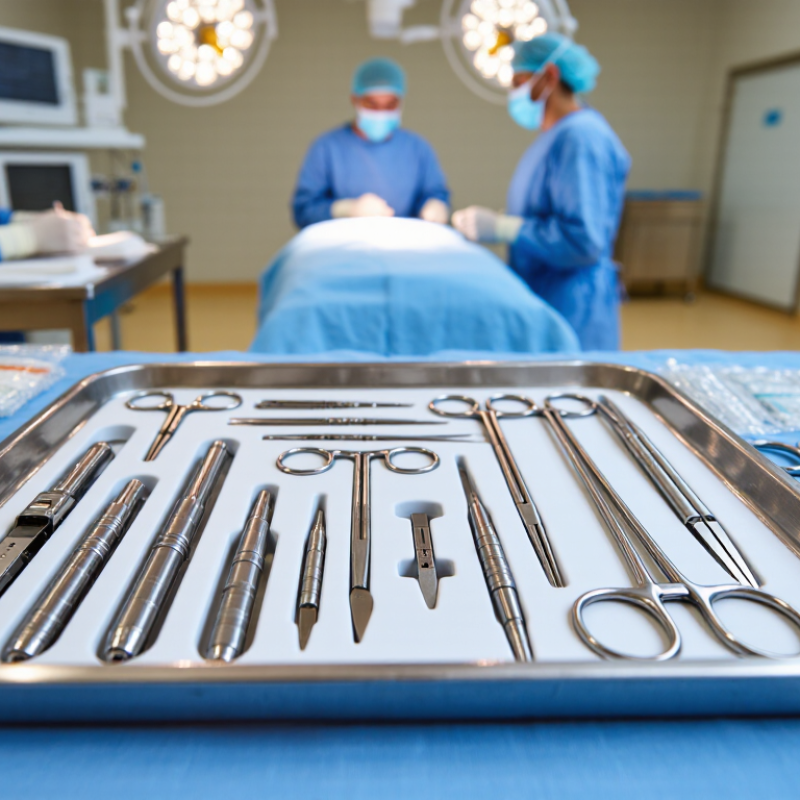
Table of Contents
[Hide]
Definition and Purpose of a Surgical Instrument Set
A surgical instrument set is a planned collection of reusable or single-use tools for a defined procedure. It may include scalpels, tissue forceps, scissors, clamps, retractors, needle holders, and a sterilization tray. Its purpose is practical: the surgical team should find the correct instrument, in the correct quantity, at the correct moment. A well-designed set reduces searching, setup delays, and unnecessary handling. It also supports cleaning, inspection, sterilization, and traceability under recognized processing requirements such as ISO 17664.
The set must match the procedure, facility, and local skills. A general abdominal set may not suit orthopedic surgery or rural operating conditions. Instrument geometry, corrosion resistance, locking quality, tray weight, and protective packaging all affect daily performance. The World Health Organization reports that surgical site infections affect about 11% of patients in low- and middle-income countries. That figure makes reliable decontamination and sterile storage more than a purchasing detail. It becomes a patient-safety requirement.
A set can look complete and still fail in practice. Buyers sometimes trust catalog counts too much. The GlobalSurg Collaborative reported postoperative complications in 17.8% of patients after surgery in low- and middle-income countries, highlighting the value of dependable systems. A practical evaluation should include sample inspection, simulated setup, cleaning instructions, and replacement planning. Staff feedback matters. Instrument sets are not merely metal collections; they are workflow tools shaped by real hands, limited time, and imperfect facilities.
What Is a Surgical Instrument Set for Global Buyers? - Definition and Purpose of a Surgical Instrument Set
| Set Category | Primary Clinical Purpose | Common Instrument Examples | Indicative Set Size | Typical Material | Common Sterilization Method | Key Buying Considerations |
|---|---|---|---|---|---|---|
| Basic General Surgery Set | Routine tissue handling, incision, dissection, hemostasis, and wound closure. | Scalpel handles, surgical scissors, tissue forceps, hemostatic forceps, needle holders, retractors, and sponge-holding forceps. | Approximately 20–40 instruments, depending on the procedure. | Medical-grade stainless steel; some handles may use aluminum or polymer components. | Steam sterilization | Verify instrument completeness, joint smoothness, box-lock alignment, and compatibility with the facility’s sterilization workflow. |
| Minor Surgery Set | Small outpatient procedures, superficial excisions, biopsies, and minor wound treatment. | Fine tissue forceps, small scissors, mosquito forceps, needle holders, skin hooks, and small retractors. | Approximately 10–25 instruments. | Stainless steel with corrosion-resistant finishing. | Steam sterilization | Prioritize compact storage, fine tips, atraumatic handling, and easy inspection after cleaning. |
| Obstetric and Gynecologic Set | Vaginal examination, tissue exposure, delivery assistance, and gynecologic procedures. | Specula, uterine sound, sponge forceps, dressing forceps, scissors, needle holders, and tissue forceps. | Approximately 15–35 instruments. | Stainless steel; selected specula may be reusable metal or single-use polymer. | Steam sterilization | Check working-surface dimensions, atraumatic edges, corrosion resistance, and suitability for the intended patient population. |
| Orthopedic Basic Set | Bone exposure, fixation assistance, soft-tissue handling, and basic orthopedic procedures. | Bone levers, periosteal elevators, bone-holding forceps, rongeurs, chisels, mallets, retractors, and surgical elevators. | Approximately 25–60 instruments. | Hardened surgical stainless steel; impact instruments require appropriate strength and finish. | Steam sterilization | Assess mechanical strength, jaw alignment, handle ergonomics, impact resistance, and compatibility with orthopedic trays. |
| Laparoscopic Set | Minimally invasive abdominal or pelvic procedures using a camera and long-shaft instruments. | Laparoscopic graspers, dissectors, scissors, needle holders, suction-irrigation instruments, trocar components, and camera accessories. | Approximately 10–30 instruments, excluding some equipment and accessories. | Stainless steel, titanium, insulated alloys, and autoclavable polymers. | Steam or low-temperature sterilization | Confirm shaft length, insulation integrity, jaw action, connector compatibility, disassembly requirements, and reprocessing instructions. |
| Ophthalmic Set | Delicate eye procedures requiring precision, small working ends, and minimal tissue trauma. | Fine forceps, micro scissors, eyelid specula, corneal scissors, needle holders, and delicate manipulators. | Approximately 10–30 instruments. | Fine-finished stainless steel, titanium, or other corrosion-resistant surgical alloys. | Steam sterilization | Inspect tip symmetry, surface smoothness, jaw precision, magnification compatibility, and protection against tip damage. |
| Dental Extraction Set | Tooth extraction, oral tissue handling, basic oral surgery, and postoperative care. | Extraction forceps, elevators, dental mirrors, probes, curettes, needle holders, and surgical scissors. | Approximately 10–25 instruments. | Stainless steel with polished or satin surgical finish. | Steam sterilization | Match forceps patterns to the intended teeth, check handle comfort, and confirm compatibility with dental instrument washers. |
| Vascular Surgery Set | Vessel exposure, vascular clamping, suturing, and atraumatic tissue manipulation. | Vascular clamps, fine forceps, vascular scissors, needle holders, vessel dilators, and delicate retractors. | Approximately 20–45 instruments. | Fine-finished stainless steel or titanium for lightweight, precise handling. | Steam sterilization | Evaluate atraumatic jaw design, clamp pressure, tip alignment, corrosion resistance, and fine suturing performance. |
| Reusable Instrument Tray | Organized storage, transport, cleaning, sterilization, and presentation of a complete instrument set. | Perforated tray, silicone holders, instrument mat, identification label, and secured lid or container system. | Tray size depends on the number and dimensions of instruments. | Stainless steel, anodized aluminum, medical-grade silicone, and heat-resistant polymers. | Steam sterilization | Check load capacity, drainage, drying performance, stacking design, lid security, and compliance with local reprocessing procedures. |
Buyer note: A surgical instrument set is a coordinated group of instruments selected for a defined clinical procedure or specialty. Final contents, quantities, materials, packaging, and sterilization parameters should be confirmed against the healthcare facility’s surgical protocols, applicable regulations, and validated reprocessing instructions.
Related Posts
-
2026 Top Surgery Instruments Types for Global Buyers?
-

What Are the 2026 Best Surgical Apparatus Types?
-
How to Choose the Right Medical Tools for Your Needs?
-

What is Implant Instruments and How to Choose the Best?
-

Best Medical Device Instruments for Global Buyers?
-

2026 Best Medical Tools for Healthcare Professionals and Patients?