Top 10 Surgical Instruments Suppliers Worldwide?
The global surgical instruments market is expanding, but its boundaries remain difficult to measure. Grand View Research estimated the market at approximately USD 15 billion in 2023, with steady growth expected through 2030. Fortune Business Insights reported a different value for the same period. Definitions vary. Reusable instruments, electrosurgical devices, and specialty tools are not always counted consistently.
That uncertainty matters when comparing the Top 10 Surgical Instruments Suppliers Worldwide. A large catalogue does not guarantee dependable performance. Hospitals need precise manufacturing, validated sterilization processes, reliable traceability, and responsive technical support. A clamp should close smoothly. Its hinge should resist corrosion after repeated sterilization cycles. Small details can affect operating-room confidence.
Dr. William A. Rutala, a leading infection-prevention specialist, stated, “Cleaning is the removal of foreign material from an object.” This principle remains central to supplier evaluation. Instruments must support safe cleaning, inspection, packaging, and reuse. Suppliers should also demonstrate quality systems, commonly through ISO 13485 certification, documented testing, and transparent regulatory information.
This guide examines established manufacturers and distributors across these practical dimensions. It considers product breadth, clinical reputation, manufacturing experience, regional availability, and after-sales service. The phrase “www surgical instruments” may produce countless online listings, but visibility is not proof of quality. Some rankings are imperfect. Market share is not always public, and supplier performance can differ by country.
Readers should verify current certifications, warranty terms, delivery records, and local compliance before purchasing. That extra check is worthwhile. In surgery, reliability is measured repeatedly, not advertised once.
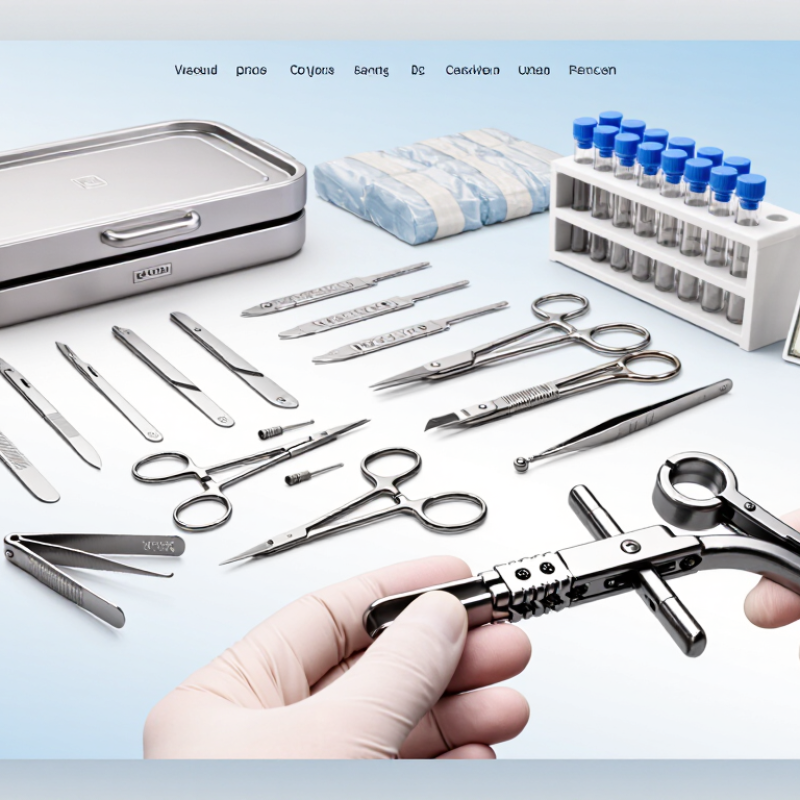
Global Surgical Instrument Market Scope and 312.9 Million Annual Operations
Top 10 Surgical Instruments Suppliers Worldwide: Global Market Scope and 312.9 Million Annual Operations
The global surgical instrument market supports hospitals, outpatient centers, and specialty clinics across many regions. A cited estimate of 312.9 million annual operations shows the scale of demand. Every procedure depends on dependable instruments, from scalpels and forceps to retractors and minimally invasive tools. Yet procedure numbers alone do not explain purchasing decisions. Surgical teams also consider durability, handling comfort, sterilization performance, and delivery reliability.
Leading suppliers usually demonstrate strong material control and consistent manufacturing processes. Stainless steel composition matters because instruments face repeated cleaning, heat, moisture, and mechanical stress. Surface finishing also affects grip, visibility, and corrosion resistance. Experienced procurement teams examine production records, quality testing, and traceability before approving a supplier. They may also review training, repair support, and replacement lead times. A low purchase price can become expensive when instruments require frequent replacement.
The figure of 312.9 million operations should be treated carefully. Definitions, reporting years, and regional coverage may differ between market studies. That uncertainty deserves attention. Hospitals should compare data sources instead of accepting one headline figure without review. Supplier evaluations should include regulatory documentation, ethical production practices, and practical feedback from surgeons and sterilization staff. In real operating rooms, small flaws matter: a loose hinge, unclear marking, or delayed shipment can interrupt carefully planned care.
Supplier Qualification Criteria: ISO 13485, FDA 510(k), and CE-MDR Compliance
When comparing the top 10 surgical instrument suppliers worldwide, compliance evidence should guide the shortlist. ISO 13485 certification shows that a supplier operates a medical-device quality management system. Check the certificate scope, issuing body, covered sites, and expiry date. A certificate alone is not enough.
For applicable devices, an FDA 510(k) supports substantial equivalence to a legally marketed device. Ask for the clearance number and confirm that it matches the exact instrument, configuration, and intended use. CE-MDR compliance requires more than a familiar CE mark. Review the EU declaration of conformity, risk-management file, technical documentation, and notified-body details when required. Check the model numbers carefully.
Look closer.
A reliable qualification process also includes production samples, material certificates, sterilization records, and lot-level traceability. During evaluation, inspect cutting edges, joint movement, surface finish, and package seals under practical conditions. Request complaint trends, corrective-action records, and post-market surveillance information. Suppliers that answer clearly usually understand their responsibilities.
Still, qualification is not perfectly predictable. Documents may be current while factory controls vary between batches. Audits can miss small process weaknesses. I would repeat inspections after approval and compare samples against approved specifications. Delivery reliability, change-control notices, and staff training records also deserve attention. A low price can hide verification costs, delayed replacements, or inconsistent workmanship. Supplier selection should therefore combine regulatory evidence with direct technical experience and documented follow-up.
Top 10 Worldwide Suppliers by Revenue, Portfolio, and Distribution Reach
A credible Top 10 list of surgical instrument suppliers should examine more than sales figures.
Revenue shows commercial scale, but not clinical value alone. Reliable rankings should compare reported revenue, product breadth, distribution reach, and service quality.
Portfolio strength includes general surgery, orthopedics, minimally invasive tools, and reusable instrument systems. Global reach matters when hospitals need stable deliveries across regions.
However, revenue figures can differ because companies use different reporting periods and currencies.
The strongest suppliers usually support hospitals through regional warehouses, trained distributors, and responsive technical teams. Their catalogs may include forceps, retractors, scissors, clamps, electrosurgical accessories, and specialized sets.
Product documentation should identify materials, cleaning limits, maintenance needs, and intended use. This detail reflects professional experience, not just marketing language.
Still, no supplier is perfect. A broad portfolio may create slower customization or inconsistent local support. Buyers should examine both strengths and gaps.
Tips:
- Request recent revenue evidence and regional sales data.
- Check whether distributors maintain local stock, not just online catalogs.
- Compare delivery times for a standard instrument set.
- Review repair procedures, training resources, and warranty terms.
- Ask for traceability documents before placing large orders.
- A lower purchase price can become expensive when replacement parts arrive late.
- Consider clinical workflow, sterilization capacity, and staff familiarity before choosing a global supplier.
Regional Comparison of Surgical Instrument Manufacturing and Hospital Demand
Regional Comparison of Surgical Instrument Manufacturing and Hospital Demand
Surgical instrument supply is concentrated in a few experienced manufacturing regions. Western Europe remains strong in precision engineering, corrosion control, and reusable instrument design. Hospitals there often demand detailed traceability, consistent finishes, and validated sterilization performance. Production costs are higher, but quality systems are usually mature.
North America shows powerful hospital demand, especially for minimally invasive, orthopedic, and robotic procedures. Buyers frequently evaluate ergonomics, repair services, delivery reliability, and training support. Manufacturing is advanced, yet some facilities depend on imported components. That dependence can expose procurement plans to shipping delays and currency changes.
Asia has the broadest manufacturing range. Established industrial centers produce high-volume instruments at competitive prices, while newer facilities invest in automated inspection and cleaner production lines. Hospital demand varies sharply between urban and rural areas. Large cities may request specialized sets, while smaller hospitals prioritize durable basics and accessible maintenance. The Middle East and parts of Africa are expanding surgical capacity, but purchasing decisions often depend on public budgets, local distributors, and workforce training.
A low purchase price can mislead.
In practical evaluations, hinge movement, jaw alignment, surface defects, and packaging quality reveal more than a catalogue image. Regional rankings also remain imperfect. Export statistics may not reflect private-label production or local hospital stock. Buyers should compare clinical use, repair history, sterilization cycles, and supplier responsiveness before judging the leading ten suppliers.
Top 10 Surgical Instruments Suppliers Worldwide? - Regional Comparison of Surgical Instrument Manufacturing and Hospital Demand
| No. |
Manufacturing Market |
Primary Regional Position |
Key Surgical Instrument Manufacturing Strengths |
Population, 2023 |
Hospital Beds per 1,000 People |
Hospital Demand Scale |
Typical Export and Supply-Chain Role |
| 1 |
United States |
North America |
Advanced surgical systems, powered instruments, electrosurgical equipment, orthopedic instruments, and high-value reusable devices. |
334.9 million |
2.9
2021 |
Very High |
Large domestic market with strong research, regulatory, clinical, and distribution infrastructure; significant high-value medical-device trade. |
| 2 |
Germany |
Western Europe |
Precision stainless-steel instruments, microsurgical tools, endoscopic instruments, orthopedic tools, and high-tolerance components. |
83.3 million |
7.8
2021 |
High |
Established European manufacturing base with strong engineering, quality-control, and cross-border distribution capabilities. |
| 3 |
Japan |
East Asia |
Minimally invasive instruments, microsurgical tools, precision forceps, endoscopy-related instruments, and high-reliability surgical devices. |
124.5 million |
12.6
2021 |
Very High |
Highly developed healthcare system and precision-manufacturing ecosystem serving both domestic hospitals and international markets. |
| 4 |
China |
East Asia |
Broad production of general surgical instruments, stainless-steel tools, disposable instruments, hospital supplies, and contract-manufactured components. |
1.41 billion |
4.0
2022 |
Very High |
Large-scale manufacturing capacity, extensive domestic demand, and a broad supplier base ranging from standard products to increasingly advanced devices. |
| 5 |
Switzerland |
Central Europe |
High-precision instruments, microsurgery, dental and ophthalmic tools, specialty components, and quality-critical medical technologies. |
8.9 million |
4.3
2021 |
Medium |
Small domestic market but strong export orientation, specialized engineering, and high-value medical-technology production. |
| 6 |
Italy |
Southern Europe |
General surgical instruments, laparoscopic tools, orthopedic instruments, dental instruments, and specialized stainless-steel products. |
58.8 million |
3.1
2021 |
High |
Strong network of specialized manufacturers and subcontractors supporting European and international hospital supply chains. |
| 7 |
France |
Western Europe |
Specialty surgical instruments, orthopedic and cardiovascular tools, minimally invasive devices, and regulated medical technologies. |
68.2 million |
5.7
2021 |
High |
Strong public-hospital demand and an established European supply chain with emphasis on regulated and specialty products. |
| 8 |
United Kingdom |
Northwestern Europe |
Specialty surgical devices, orthopedic and cardiovascular instruments, research-linked technologies, and clinical-use equipment. |
68.4 million |
2.5
2021 |
High |
Research-intensive market with substantial public healthcare procurement and strong links to international medical-device distribution. |
| 9 |
India |
South Asia |
General surgical instruments, stainless-steel tools, orthopedic instruments, dental instruments, and cost-sensitive hospital products. |
1.43 billion |
1.3
2021 |
Very High |
Very large and expanding hospital market, with a growing domestic manufacturing base and increasing demand for affordable surgical products. |
| 10 |
Pakistan |
South Asia |
Handheld stainless-steel surgical instruments, scissors, forceps, clamps, orthopedic tools, and private-label contract manufacturing. |
241.5 million |
0.6
2021 |
High |
Export-oriented manufacturing cluster with particular strength in labor-intensive handheld instruments and contract production. |
Data notes: Population figures are rounded 2023 estimates from the World Bank. Hospital-bed figures represent the latest broadly comparable World Bank indicator available for each market; reference years differ by country. Manufacturing-position descriptions are regional market classifications based on documented medical-device production capabilities and export orientation, not rankings of individual companies or brands.