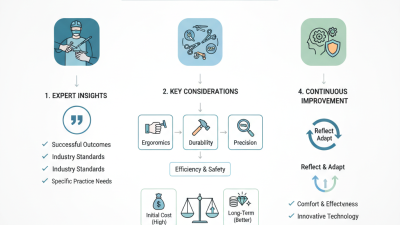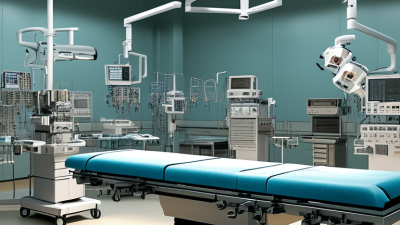
10 Best Hospital Medical Equipment Suppliers Worldwide

Choosing hospital medical equipment suppliers affects patient safety, clinical efficiency, and long-term operating costs. It also shapes the daily experience of nurses, technicians, and patients.

The market is expanding rapidly. Fortune Business Insights valued the global medical devices market at approximately $512.29 billion in 2023. It projects growth to nearly $799.67 billion by 2032. The World Health Organization’s Global Atlas of Medical Devices also highlights unequal access, maintenance gaps, and limited technical capacity across health systems. These realities make supplier evaluation more complex than comparing product prices.

Dr. Margaret Chan, former Director-General of the World Health Organization, stated, “Medical devices are indispensable for the prevention, diagnosis, treatment and rehabilitation of illness and disease.” That principle guides this overview of the 10 best hospital medical equipment suppliers worldwide.

The selection considers product breadth, regulatory quality, clinical evidence, service networks, training, interoperability, and lifecycle support. It also examines how suppliers respond when equipment fails at 2 a.m. in a crowded emergency department. A polished catalogue is not enough. Reliable maintenance matters more.

No ranking is perfect. Regional availability, procurement rules, and hospital size can change the outcome. Some suppliers excel in imaging, while others lead in surgical systems, monitoring, or laboratory technology. Evidence is also uneven across markets. Therefore, readers should treat this list as a practical starting point, not a final purchasing decision. Local validation remains essential before signing a major contract.
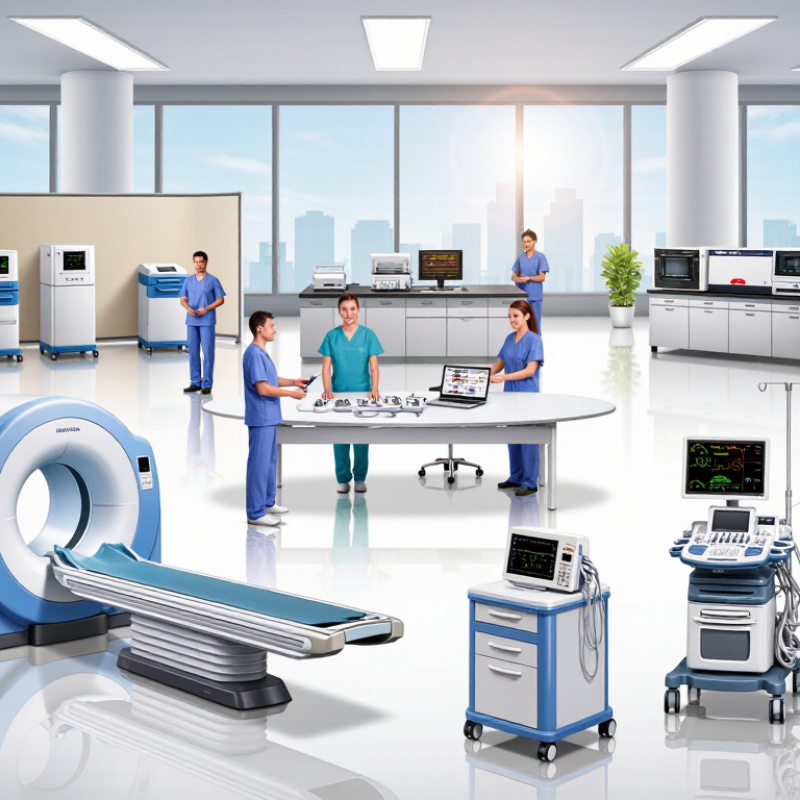
10 Best Hospital Medical Equipment Suppliers Worldwide

Global Medical Equipment Market: 2 Million Device Types Classified by WHO

10 Best Hospital Medical Equipment Suppliers Worldwide

Global Medical Equipment Market: 2 Million Device Types Classified by WHO

The global medical equipment sector is unusually broad. WHO reports more than two million medical device types, grouped into over 7,000 generic categories. These include surgical instruments, imaging systems, diagnostic tests, implants, monitoring devices, and basic hospital furniture. The classification comes from the WHO Global Atlas of Medical Devices. It shows why supplier comparisons cannot rely on product volume alone.

The numbers are substantial. Grand View Research estimated the global medical devices market at approximately US$512 billion in 2023. Its analysis also expects continued growth through the decade. However, market estimates vary by definition. Some reports include digital health systems, while others exclude them. That difference deserves attention.

A strong hospital supplier should provide traceable documentation, training, spare parts, and dependable maintenance. A ventilator may look impressive in a catalogue. Its value falls sharply without compatible circuits, calibration records, and local technical support. Procurement teams should examine ISO 13485 quality systems, clinical evidence, cybersecurity controls, and regulatory clearance. WHO guidance also stresses appropriate technology for local infrastructure and workforce capacity.

The classification is useful, but not perfectly tidy. Some devices serve several clinical purposes, creating overlap between categories. Buyers should therefore compare suppliers by clinical need, lifecycle cost, and service reliability. The cheapest quotation can become expensive after installation delays, unavailable components, or repeated repairs.

Global Medical Equipment Market: Major Device Segments

The global medical-device landscape includes roughly 2 million different device types, covering diagnostic, monitoring, therapeutic, surgical and hospital-support equipment. This chart presents selected global market segments using published industry market estimates; values are rounded and shown in USD billions.

Source context: World Health Organization medical-device nomenclature and global medical-device market estimates from publicly available industry research reports. Figures are rounded estimates and exclude company-level data.

Selection Criteria: Revenue, ISO 13485 Certification, Reach, and Product Breadth

10 Best Hospital Medical Equipment Suppliers Worldwide

A credible worldwide ranking needs more than impressive sales figures. Revenue should come from audited reports and cover at least three years. The WHO Global Health Expenditure Database reports global health spending reached approximately US$9.8 trillion in 2021. That scale shows why supplier stability matters during large hospital projects. Still, revenue can hide weak service networks or delayed spare parts.

ISO 13485 certification is a stronger quality signal when verified for the relevant manufacturing site. The ISO Survey 2023 provides useful certification data, but certification alone does not prove clinical performance. Buyers should check certificate scope, expiry dates, corrective-action records, and lot traceability. Reach should include local engineers, training capacity, language support, and realistic delivery times. Product breadth also matters. A supplier covering patient monitoring, imaging accessories, surgical equipment, and critical-care consumables may simplify procurement. However, broad catalogs can create uneven technical support. That is an uncomfortable limitation.

Tips: Compare audited revenue, ISO 13485 scope, regional service coverage, and product categories in one scoring sheet. Request two hospital references from similar climates. Test a sample installation. Also check whether replacement parts remain available after five years. A supplier promising everything may deserve more questions, not fewer. Forecasts from industry market reports can support market context, but they should not replace site audits, user feedback, or contract-level verification.

The Top 10 Suppliers Across Imaging, Surgical, ICU, and Laboratory Equipment

Choosing among the ten strongest hospital equipment suppliers requires more than comparing catalog prices. The leading imaging suppliers provide MRI, CT, ultrasound, and digital radiography systems with documented calibration records. Their engineers should explain image quality, radiation controls, room shielding, and service intervals in practical language. A reliable supplier also plans installation around patient flow, power capacity, and local technical skills. Small details matter.

Surgical equipment suppliers deserve equal scrutiny. Look for electrosurgical units, operating tables, surgical lights, anesthesia workstations, and minimally invasive instrument support. ICU-focused suppliers should offer ventilators, bedside monitors, infusion pumps, and emergency backup plans. During a site visit, ask how alarms are tested and how replacement parts are stocked. A polished demonstration can hide weak after-sales support. That risk is real.

Laboratory suppliers complete the picture through analyzers, centrifuges, refrigerators, biosafety equipment, and laboratory information integration. The best suppliers provide validation documents, user training, preventive maintenance, and traceable quality checks. Hospitals should request references from facilities with similar workloads, budgets, and clinical complexity. Total cost includes downtime, consumables, software updates, and staff retraining. Rankings can mislead. A supplier may excel in imaging but struggle with laboratory logistics. Procurement teams should verify warranty terms, local compliance records, cybersecurity controls, and response times before signing. My own shortlist would change after a difficult installation.

Regional Performance Across North America, Europe, and Asia-Pacific Markets

The 10 Best Hospital Medical Equipment Suppliers Worldwide

Regional performance often matters more than a supplier’s global reputation. Hospitals need equipment that fits local standards, budgets, workflows, and service expectations. In North America, leading suppliers usually compete through advanced monitoring systems, rapid maintenance, and strong clinical training. Hospitals also expect clear cybersecurity controls and dependable replacement parts. Local support matters.

European markets place greater emphasis on energy efficiency, documentation, product lifecycle costs, and environmental responsibility. Suppliers serving these hospitals must provide detailed technical files and consistent staff education. Public procurement can be slow, but its evaluation criteria are often precise. A polished sales presentation is not enough.

Asia-Pacific presents a broader range of operating conditions. Major urban hospitals may seek robotic systems, imaging platforms, and connected intensive-care technology. Regional facilities may value durable equipment, simple interfaces, and fast technician access instead. Suppliers perform well when they adapt installation plans to transport limits, language needs, and uneven infrastructure. The gap remains.

Across all three regions, reliable suppliers show measurable service records, transparent warranties, and traceable maintenance histories. Hospitals should examine uptime data, training completion, calibration schedules, and response times before signing contracts. These details reveal more than rankings alone. However, supplier comparisons are rarely perfect. Published performance figures may use different definitions, and smaller hospitals often receive less attention. A careful buyer should verify claims through site visits, user interviews, and documented service evidence.

10 Best Hospital Medical Equipment Suppliers Worldwide - Regional Performance Across North America, Europe, and Asia-Pacific Markets

Non-brand market benchmark table. Regional ratings reflect relative procurement demand, installed-base opportunity, regulatory accessibility, and service requirements rather than individual company performance.
Rank Equipment Category Core Hospital Use North America
Demand
Europe
Demand
Asia-Pacific
Demand
Typical Purchase
Cycle
Primary Regulatory
Consideration
Service Intensity Regional Performance Notes
1 Patient Monitoring Systems Continuous monitoring in intensive care, emergency, operating, and general wards Very High High Very High 3–7 years IEC 60601; ISO 13485; local registration Medium–High High replacement volume and strong demand for wireless connectivity, central stations, and interoperability.
2 Ultrasound Imaging Systems Diagnostic imaging, obstetrics, cardiology, emergency care, and point-of-care applications High High Very High 3–6 years IEC 60601; software and cybersecurity controls Medium Portable and handheld systems support expansion into primary care, rural hospitals, and outpatient facilities.
3 Digital X-Ray Systems General radiography, trauma imaging, orthopedic examinations, and mobile bedside imaging Very High High Very High 5–10 years Radiation safety; IEC 60601; local licensing Medium Digital conversion and mobile radiography remain major purchasing drivers, especially in developing healthcare systems.
4 Computed Tomography Systems Emergency diagnostics, oncology, cardiovascular imaging, and surgical planning Very High High High 7–12 years Radiation protection; facility accreditation; quality assurance Very High Capital-intensive procurement favors suppliers with local installation, uptime guarantees, and long-term maintenance capability.
5 Magnetic Resonance Imaging Systems Neurology, musculoskeletal imaging, oncology, abdominal imaging, and cardiac examinations Very High High High 8–15 years Magnetic-field safety; site planning; IEC 60601 Very High Demand is concentrated in tertiary hospitals and imaging centers where uptime, cooling, shielding, and specialist support are critical.
6 Anesthesia Delivery Systems Administration of anesthetic gases and respiratory support during surgical procedures High High Very High 7–12 years ISO 80601-2-13; gas safety; electrical safety High Operating-room expansion and replacement of aging systems support stable demand across all three regions.
7 Ventilators and Respiratory Care Equipment Mechanical ventilation, respiratory failure treatment, critical care, and transport support High High Very High 5–10 years ISO 80601-2-12; alarm and cybersecurity requirements High Critical-care capacity, aging populations, and respiratory disease management sustain demand for advanced and transportable systems.
8 Infusion Pumps and Drug-Delivery Systems Controlled delivery of fluids, medication, nutrition, and chemotherapy Very High High Very High 4–8 years IEC 60601-2-24; medication safety; cybersecurity Medium–High High unit volumes and medication-safety initiatives make interoperability, dose-error reduction, and fleet management important.
9 Surgical and Electrosurgical Systems Open surgery, minimally invasive procedures, tissue cutting, coagulation, and operating-room integration High High High 5–10 years IEC 60601; thermal and electrical safety; sterilization compatibility High Procedure growth and operating-room modernization create opportunities for integrated energy, imaging, and workflow platforms.
10 Sterilization and Disinfection Equipment Decontamination, instrument sterilization, infection prevention, and central sterile services High High Very High 8–15 years ISO 17665; ISO 15883; infection-control validation High Hospital construction, infection-prevention standards, and replacement of aging sterilization infrastructure support long-term demand.
Assessment basis: Regional demand ratings are qualitative benchmarks based on hospital infrastructure scale, replacement needs, procedure volumes, public and private healthcare investment, and equipment-service complexity. Purchase-cycle ranges are typical planning intervals and may vary by hospital type, procurement budget, technology lifecycle, and local regulations.

Comparing Compliance, Service Networks, Innovation, and Hospital-Use Value

The best hospital equipment suppliers are judged beyond catalog size. Compliance must cover local registration, ISO 13485 quality systems, IEC 60601 safety, cybersecurity, and post-market surveillance. Paper compliance is insufficient. Hospitals should request audit records, recall procedures, and device traceability evidence.

Service networks often determine real hospital-use value. A repair team arriving within 24 hours can matter more than a lower purchase price. OECD Health at a Glance 2023 reported average health spending of 9.2% of GDP across OECD countries in 2022. That pressure makes uptime, spare-parts availability, training, and predictable maintenance costs essential. A supplier with excellent equipment but weak regional support creates hidden expenses.

Innovation should solve clinical problems, not decorate brochures. Interoperability, remote diagnostics, energy efficiency, and simpler user interfaces deserve close attention. The WHO and UNICEF Global Report on Assistive Technology estimates that 2.5 billion people need assistive products, while nearly 1 billion lack access. This highlights the value of adaptable, affordable equipment. The WHO and World Bank’s 2023 monitoring report also found that 2 billion people faced financial hardship from out-of-pocket health spending in 2021. Buyers should therefore compare total ownership costs, not only technical specifications. I would still question every “smart” feature. Some add complexity without improving patient care.

TOP